Mastering the Financial Science Behind High-Performing Service Departments

- Description
- Curriculum
- FAQ
- Notice
- Reviews

The Advanced Effective Labor Rate (ELR) Masterclass takes a deep dive into the financial mechanics behind labor sales, technician productivity, labor mix, menu pricing, warranty work, customer pay performance, and repair order composition. Rather than focusing solely on raising labor rates, this course teaches participants how to maximize the value of every labor hour while maintaining customer trust and operational efficiency.
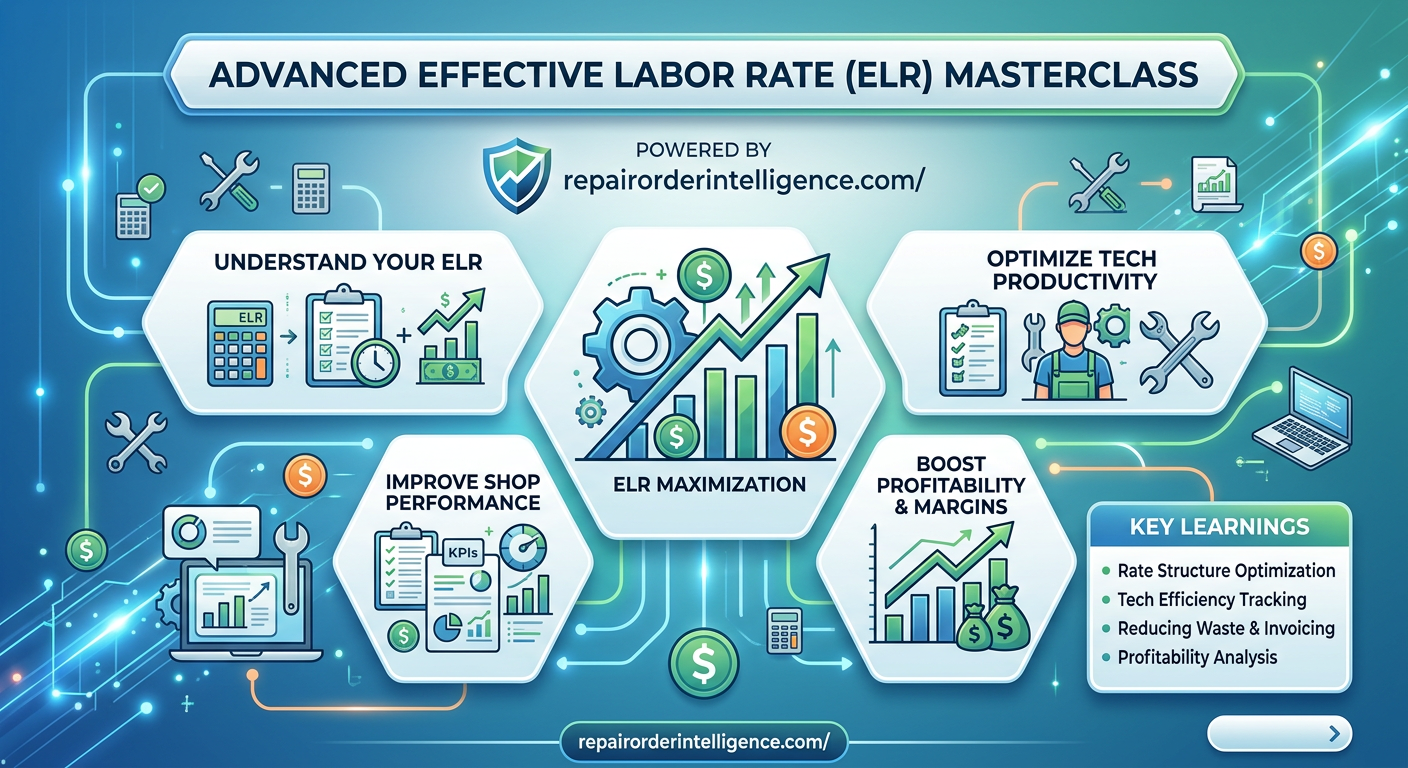
Throughout the program, you’ll learn why two dealerships with the same posted labor rate can have dramatically different effective labor rates, and how seemingly small operational decisions—such as labor operation selection, advisor presentation, dispatch efficiency, technician utilization, and repair order structure—can significantly impact profitability.
The course also explores how warranty repairs, internal work, maintenance packages, diagnostic time, discounts, and goodwill adjustments influence ELR, often without managers realizing the long-term financial impact. Using real-world dealership examples, you’ll learn how to identify hidden revenue leakage and uncover opportunities to improve labor performance without simply increasing prices.
In addition to operational strategies, this masterclass covers how to measure ELR correctly, interpret trends over time, benchmark performance across advisors and technicians, and avoid common reporting mistakes that can lead to poor business decisions. Participants will gain a better understanding of the relationship between ELR, gross profit, technician efficiency, shop capacity, and overall fixed operations performance.
Whether you’re a Service Manager, Fixed Operations Director, General Manager, Controller, Dealer Principal, Warranty Administrator, or Service Advisor looking to better understand the financial side of the service department, this course provides practical strategies that can be implemented immediately.
By the end of the masterclass, you’ll have the knowledge and confidence to move beyond simply tracking Effective Labor Rate—you’ll understand how to influence it strategically, measure it accurately, and use it as a powerful tool for increasing dealership profitability while delivering greater value to your customers.
Course Length: Approximately 3–4 hours of combined video instruction, interactive learning, and practical exercises. Designed for self-paced learning and immediate application in dealership operations.
-
1
 Mastering the Financial Science Behind High-Performing Service Departments Course 1 of 10
Take a deeper dive into the financial and operational mechanics that drive dealership service department performance. This advanced course is designed for Fixed Operations Directors, Service Managers, Parts Managers, Dealer Principals, and other dealership leaders who want to move beyond basic KPIs and understand the metrics that truly impact profitability.
Throughout ten in-depth lessons, you'll explore advanced topics including Effective Labor Rate (ELR), opportunity cost, technician efficiency and productivity, labor mix optimization, repair order analytics, warranty financial performance, capacity management, parts-to-labor relationships, and executive-level KPI management. Rather than focusing on theory alone, each lesson demonstrates how these concepts apply to real dealership operations and how small process improvements can create significant financial gains.
By the end of the course, you'll be able to identify hidden profit opportunities, interpret repair order data with greater confidence, evaluate operational performance using meaningful metrics, and develop strategies that improve profitability without simply increasing vehicle traffic or raising labor rates. Whether you're leading a single dealership or overseeing multiple stores, this course provides the analytical framework needed to make data-driven decisions and build a higher-performing fixed operations department.

-
2
 Mastering the Financial Science Behind High-Performing Service Departments Course 1 of 10 Video Lesson

-
5
Where ELR Actually Leaks: The Repair Order Value Pathway Course 3 of 10
In Lesson 3, we move from system design into operational reality by mapping exactly where Effective Labor Rate (ELR) is lost inside the repair order lifecycle. This lesson breaks down the RO into six critical stages—write-up, diagnosis, estimate approval, execution, add-on opportunities, and close-out—and shows how each step can either preserve or quietly erode labor revenue.
Rather than focusing on pricing or policy, this lesson exposes the day-to-day workflow decisions that create “micro-leakage” across hundreds of repair orders. Students learn how missing documentation, compressed diagnostic time, advisor discounting behavior, technician inefficiencies, missed add-ons, and billing errors all contribute to measurable ELR reduction.
The key takeaway is that ELR is not lost in a single failure point, but through a chain of small operational decisions that compound over time. By understanding the repair order value pathway, fixed operations leaders gain visibility into where labor profitability is actually being lost—and why it often goes unnoticed in standard reporting.
This lesson sets the foundation for the next stage of the course, where we examine how advisor behavior becomes one of the most powerful drivers of ELR outcomes at the point of customer interaction.

-
6
Where ELR Actually Leaks: The Repair Order Value Pathway Course 3 of 10 Video Lesson
Where ELR Actually Leaks: The Repair Order Value Pathway Course 3 of 10 Video Lesson

https://repairorderintelligence.com/
-
7
Advisor Behavior: The Hidden Driver of Effective Labor Rate (ELR) Course 4 of 10
-
8
Advisor Behavior: The Hidden Driver of Effective Labor Rate (ELR) Course 4 of 10 Video Lesson
Advisor Behavior: The Hidden Driver of Effective Labor Rate (ELR) Course 4 of 10 Video Lesson

https://repairorderintelligence.com/

-
9
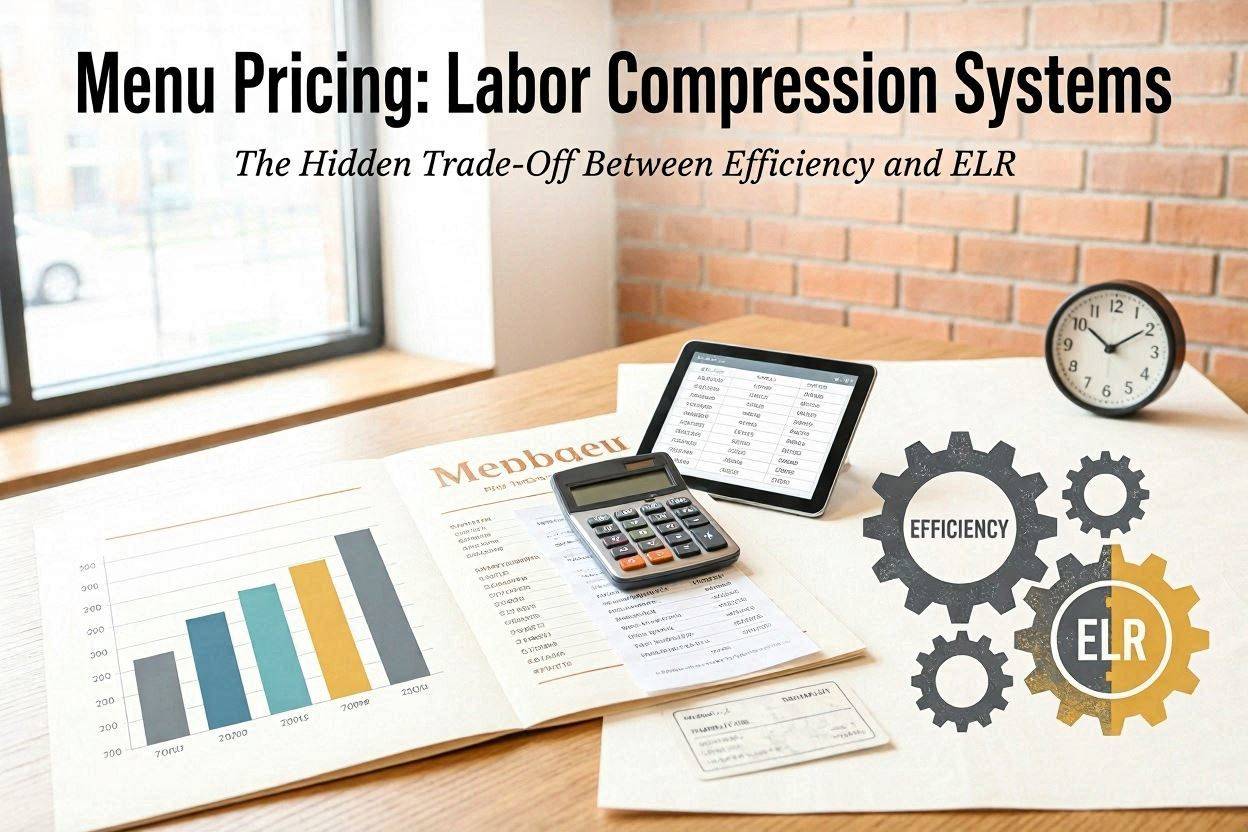
Menu Pricing & Labor Compression Systems: The Hidden Tradeoff Between Efficiency and ELR Course 5 of 10
In Lesson 5, the course shifts from behavioral drivers and advisor influence into the structural pricing systems that quietly shape labor profitability at scale. This lesson examines menu pricing models and bundled labor structures, revealing how they improve efficiency and throughput while simultaneously compressing Effective Labor Rate (ELR).
Students learn how pre-packaged services such as maintenance menus, brake bundles, and flat-rate diagnostics simplify operations but reduce labor visibility and limit the ability to capture true repair complexity. The lesson introduces the concept of “labor compression,” where multiple labor operations are consolidated into a single price point, often masking the true value of technician time.
While menu systems are widely adopted for their operational benefits—faster approvals, consistent pricing, and reduced advisor friction—this lesson shows how those same advantages can lead to reduced labor yield per repair order when not properly measured and managed.
By the end of this lesson, students understand that menu pricing is not just a pricing strategy, but a structural system that trades labor granularity for efficiency. This reframes profitability challenges as a design issue, where improved throughput does not always translate into improved Effective Labor Rate.
This lesson sets the foundation for the next module, which explores how manufacturer warranty reimbursement systems impose external constraints on labor profitability regardless of internal pricing strategy.
-
10
Menu Pricing & Labor Compression Systems: The Hidden Tradeoff Between Efficiency and ELR Course 5 of 10 Video Lesson
Menu Pricing & Labor Compression Systems: The Hidden Tradeoff Between Efficiency and ELR Course 5 of 10 Video Lesson

https://repairorderintelligence.com/
-
11
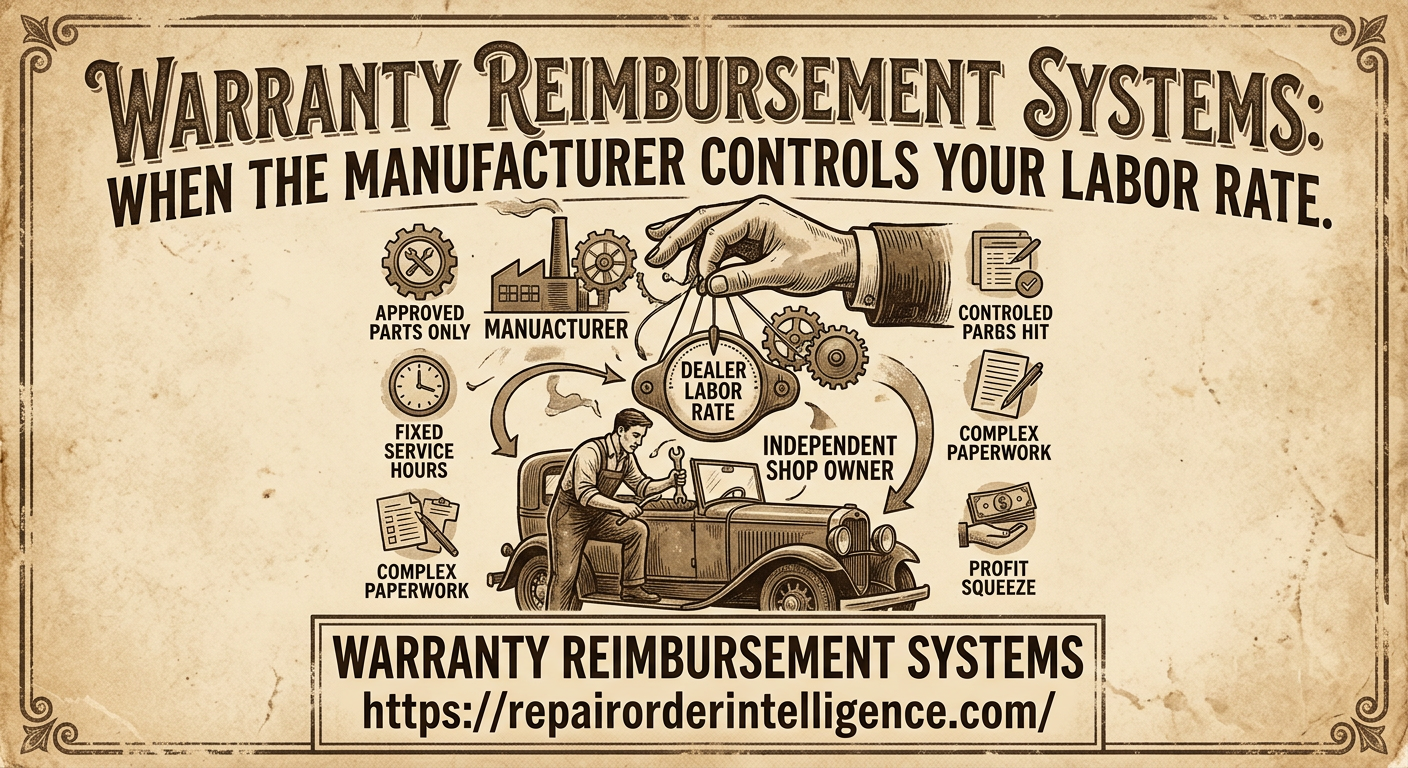
Warranty Reimbursement Systems: When the Manufacturer Controls Your Labor Rate Course 6 of 10

-
12
Warranty Reimbursement Systems: When the Manufacturer Controls Your Labor Rate Course 6 of 10 Video Lesson
Warranty Reimbursement Systems: When the Manufacturer Controls Your Labor Rate Course 6 of 10 Video Lesson
https://repairorderintelligence.com/
-
13
Technician Productivity vs ELR Reality: Why Efficiency Doesn’t Always Mean Profit Course 7 of 10
In this course, the focus shifts to technician productivity and its relationship with Effective Labor Rate (ELR), challenging one of the most common misconceptions in fixed operations management: that increased efficiency automatically leads to increased profitability. While technician performance metrics such as hours produced, efficiency, and utilization are often used as primary indicators of success, this lesson explains why these measures do not reliably reflect labor profitability.
Students learn how productivity improvements can unintentionally dilute labor value through shifts in job mix, increased volume of lower-value work, greater exposure to warranty and internal labor, and the system’s failure to convert increased capacity into higher-value billing opportunities. The course introduces the concept of labor dilution, where total output increases but average labor value per hour remains flat or declines.
The key takeaway is that productivity measures capacity, not revenue retention. Effective Labor Rate depends not on how much work is completed, but on how effectively that work is monetized across varying labor types and operational constraints.
By the end of this course, students understand the “efficiency trap,” where operational improvements appear positive on the surface but fail to translate into financial gains. This sets up the next lesson, which examines how parts availability, pricing structure, and workflow delays indirectly influence labor efficiency and overall ELR performance.

-
14
Technician Productivity vs ELR Reality: Why Efficiency Doesn’t Always Mean Profit Course 7 of 10 Video Lesson
Technician Productivity vs ELR Reality: Why Efficiency Doesn’t Always Mean Profit Course 7 of 10 Video Lesson
https://repairorderintelligence.com/

-
15
Parts Operations & the Hidden Cost Structure of Repair Orders: How Parts Control ELR Without Touching Labor Rates Course 8 of 10
In this lesson, the focus shifts to parts operations and their often-overlooked impact on Effective Labor Rate (ELR). While parts is typically viewed as a separate department from labor, this course reveals how parts performance directly influences labor efficiency, throughput, and ultimately labor profitability.
Students learn how parts delays, incorrect orders, and availability issues create technician idle time, job fragmentation, and rework cycles that reduce labor consistency per repair order. These disruptions do not appear as direct labor losses in reporting, but they quietly erode ELR by breaking the flow of billable labor execution.
The lesson also explores how parts pricing and availability indirectly influence advisor behavior, including estimate adjustments, scope reduction, and approval rates. This creates a secondary behavioral impact that further affects labor capture without changing posted labor rates.
By the end of this lesson, students understand that parts is not just a support function, but a critical driver of labor performance. It acts as a hidden multiplier or limiter of Effective Labor Rate by controlling how efficiently labor is converted into billable output across the repair order lifecycle.
This lesson prepares students for the final strategic module, where labor mix distribution—customer pay, warranty, and internal labor—is analyzed as one of the most powerful determinants of ELR ceiling and overall fixed operations profitability.

-
16
Parts Operations & the Hidden Cost Structure of Repair Orders: How Parts Control ELR Without Touching Labor Rates Course 8 of 10 Vi
Parts Operations & the Hidden Cost Structure of Repair Orders: How Parts Control ELR Without Touching Labor Rates Course 8 of 10 Video Lesson

https://repairorderintelligence.com/
-
17
Labor Mix Strategy: The True Ceiling of Effective Labor Rate (ELR) Course 9 of 10
-
18
Labor Mix Strategy: The True Ceiling of Effective Labor Rate (ELR) Course 9 of 10 Video Lesson
Labor Mix Strategy: The True Ceiling of Effective Labor Rate (ELR) Course 9 of 10 Video Lesson

https://repairorderintelligence.com/

-
19
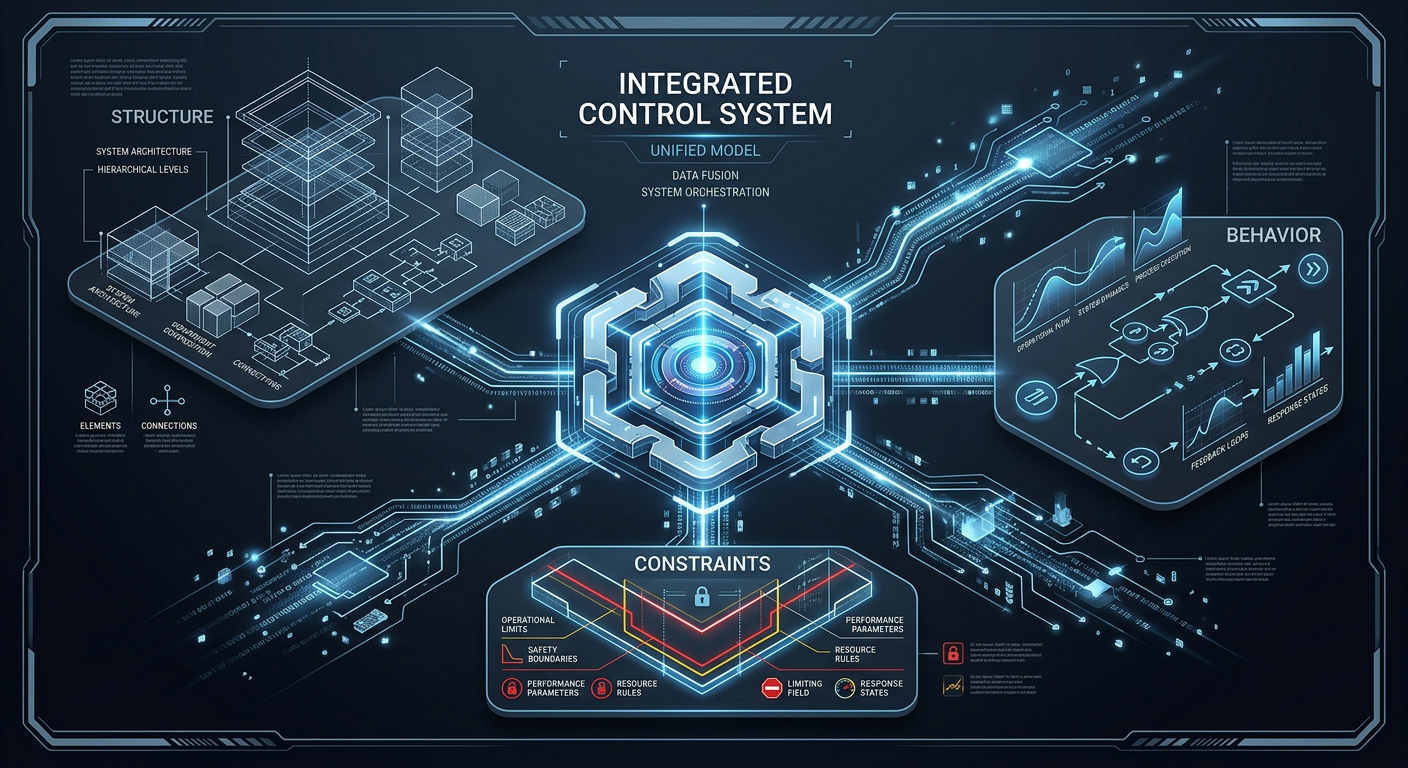
The Integrated ELR Control System: Connecting Behavior, Structure, and Constraints into One Model Course 10 of 10
-
20
The Integrated ELR Control System: Connecting Behavior, Structure, and Constraints into One Model Course 10 of 10 Video Lesson
The Integrated ELR Control System: Connecting Behavior, Structure, and Constraints into One Model Course 10 of 10 Video Lesson

https://repairorderintelligence.com/
Fixed Operations Directors
Service Directors
Service Managers
Parts Managers
General Managers
Dealer Principals
Controllers
Service Advisors seeking leadership roles
OEM Field Personnel
Automotive Consultants
No advanced accounting background is required, although experience in dealership operations will help you apply the concepts more quickly.
The principles taught throughout this course apply to every franchise dealership regardless of manufacturer.
Whether your dealership represents F o jd, G M, Stell antis, Toy ota, Hon da, Nis san, Hyu n dai, Ki a, Sub aru, Volks wagen, Merc edes-Benz, B M W, or any other OEM, Effective Labor Rate behaves according to the same operational and financial principles.
Unlike your posted labor rate, ELR reflects what your dealership actually earns after considering warranty reimbursement, discounts, menu pricing, labor mix, advisor behavior, and operational efficiency.
It is one of the most accurate indicators of labor profitability.
This course focuses on improving the labor value your dealership actually captures—not simply increasing the advertised labor rate.
Many dealerships with identical posted labor rates produce dramatically different ELRs because of operational differences.
One of the primary concepts taught in this course is that ELR is a dealership-wide outcome.
It is influenced by:
Advisors
Technicians
Parts personnel
Warranty administrators
Management
Pricing strategies
OEM reimbursement policies
Every department contributes.
ELR measures labor value retained.
A dealership can produce more labor hours while simultaneously reducing average labor value through warranty mix, menu pricing, discounts, or labor compression.
This course explains why productivity and profitability are different measurements.
Manufacturer time guides, reimbursement policies, claim adjustments, and diagnostic limitations all influence realized labor value.
Ignoring warranty's effect creates an incomplete understanding of ELR.
If increased capacity is filled with lower-value labor, warranty repairs, internal work, or discounted services, ELR may remain unchanged—or even decline.
Efficiency creates opportunity.
It does not automatically create profitability.
Customer Pay, Warranty, and Internal labor each have different financial characteristics.
Changing the percentage of each labor type changes overall ELR—even if nothing else changes.
Delayed parts create:
Technician downtime
Job fragmentation
Repeat visits
Rework
Lower throughput
Although parts does not determine labor rates, it strongly influences labor realization.
The course combines operational workflow, service management, financial analysis, warranty administration, technician productivity, and dealership management into one integrated model.
Throughout the course you learn how to identify hidden sources of labor leakage including:
Advisor discounting
Menu compression
Warranty reimbursement limits
Parts delays
Technician idle time
Labor mix shifts
Missed diagnostic recovery
Structural pricing issues
Each workbook contains practical exercises allowing you to compare your own dealership's performance against the concepts presented in each lesson.
Most exercises use information already available through your DMS or dealership reporting.
OEM training teaches manufacturer processes, warranty procedures, and operational standards.
This course teaches how those systems interact financially to influence Effective Labor Rate.
The two complement one another.
Instead:
Measure your current ELR.
Identify your largest source of labor leakage.
Implement one improvement.
Measure the results.
Repeat the process.
Small improvements across multiple areas typically produce greater long-term gains than one major initiative.
In reality, ELR is influenced by dozens of interacting variables including:
Pricing
Warranty
Parts
Advisors
Technician productivity
Labor mix
Menu pricing
Workflow efficiency
Customer approval behavior
Understanding these interactions is the foundation of this course.
Effective Labor Rate is not a number to chase—it is the result of a system to manage.
When behavior, structure, workflow, and external constraints are aligned, profitability becomes more predictable, labor leakage becomes easier to identify, and the dealership gains greater control over its fixed operations performance.
Your next step is to apply these concepts using your dealership's own repair order data.
The most meaningful improvements occur when the principles in this course are combined with real-world analysis of your dealership's labor operations.
Visit RepairOrderIntelligence.com to learn more about advanced repair order studies, dealership analytics, and fixed operations consulting designed to uncover hidden profit opportunities and improve long-term performance.
Thank You
Thank you for investing in your professional development and your dealership's future. We hope this course has provided a new perspective on Effective Labor Rate and the interconnected systems that drive fixed operations profitability.
Repair Order Intelligence
Transforming Repair Order Data into Actionable Profitability Insights
Warning: This course may permanently change the way you look at your monthly financial statement.
After completing this masterclass, you'll probably find yourself questioning why your Effective Labor Rate is what it is, where labor dollars are quietly slipping away, and why two advisors with the same labor rate can produce completely different results.
This course won't magically raise your ELR overnight—but it will give you the knowledge to understand why it performs the way it does and where your biggest opportunities are hiding.
Fair warning: there's a good chance you'll start looking at every repair order, discount, warranty claim, and labor operation a little differently. That's not a side effect... that's the point.
Advanced Effective Labor Rate (ELR) Masterclass
Basic Course Information
Course Title: Advanced Effective Labor Rate (ELR) Masterclass
Provider: Repair Order Intelligence
Format: Online Video + Workbooks + Final Exam
Total Lessons: 10 Video Modules
Total Video Time: ~37 Minutes
Estimated Total Completion Time: 3–5 Hours (including exercises)
Course Overview
This course provides a structured introduction to understanding and managing Effective Labor Rate (ELR) in a fixed operations environment. Rather than focusing only on labor pricing, the course examines how ELR is influenced by advisor behavior, technician productivity, parts operations, warranty constraints, and labor mix distribution.
Participants will learn how ELR is generated across the full repair order lifecycle and why traditional reporting often fails to explain real profitability performance.
Who This Course Is For
- Fixed Operations Directors
- Service Managers
- Parts Managers
- Dealer Principals
- Service Advisors
- Automotive Financial Controllers
What You Will Learn
- What Effective Labor Rate actually measures
- How ELR is impacted by daily service operations
- Why labor mix is critical to profitability
- How parts and workflow affect labor capture
- How warranty and manufacturer constraints limit ELR
- How to identify hidden labor leakage in repair orders
- How to view ELR as a system, not a single metric
Course Structure
- 10 Video Lessons (3.7 minutes each)
- 10 Guided Student Workbooks
- Practical dealership-based exercises
- Final 50-question certification exam
Learning Outcome
By the end of this course, participants will be able to interpret Effective Labor Rate as a system-level outcome and identify the operational drivers that influence labor profitability across the entire dealership.
They will gain the ability to move beyond surface-level KPIs and begin diagnosing the underlying causes of labor performance changes.
Completion Result
Upon completion, participants will have a foundational understanding of ELR systems thinking and how labor value is created, compressed, and influenced across fixed operations.
Course Requirements
Advanced Effective Labor Rate (ELR) Masterclass
Prerequisites
There are no formal prerequisites required to enroll in this course.
You do not need a degree in finance, a background in data analytics, or a secret handshake from the service department to get started.
If you can read a repair order, recognize a labor hour, and have ever wondered why “we’re busy but not making any money,” you are fully qualified.
Recommended Experience (Strongly Suggested)
While not required, this course is designed with the assumption that you have at least a few years of real-world dealership experience.
Without it, some concepts may feel like:
- “interesting theory”
- or
- “painfully accurate but emotionally uncomfortable”
This material really starts to make sense when you've lived through:
- warranty claim adjustments that made no sense
- advisors who can discount faster than you can approve
- parts delays that somehow become “labor problems”
- and ELR reports that look fine… until they don’t
Ideal Candidate (Best Fit)
You will get the most value from this course if you have:
- Worked in fixed operations for 2+ years (recommended)
- Been confused by ELR reports at least once (required for emotional readiness)
- Experienced a month that was “busy but not profitable”
- Attempted to explain labor gross to someone and immediately regretted it
Technical Requirements
- Ability to view short video lessons (approximately 3.7 minutes each)
- Basic familiarity with dealership reporting systems (DMS preferred, confusion acceptable)
- Willingness to question previously accepted “this is just how it is” answers
Warning Label (Read Carefully)
This course may cause:
- Sudden awareness of labor leakage you previously ignored
- Strong opinions about menu pricing structure
- Side effects such as analyzing every repair order you encounter
- Mild frustration when others say “we just need more hours sold”
These effects are normal and tend to fade only if you stop thinking about ELR altogether—which, unfortunately, becomes increasingly difficult after Course 3.
Final Note
You don’t need experience to take this course.
But if you don’t have at least a few years in a dealership environment…
Good luck.
You’re going to understand everything… just maybe not in the order you expected.
Advanced Effective Labor Rate (ELR) Masterclass
This masterclass is designed for fixed operations professionals who want to understand the financial drivers behind labor profitability and learn how to improve Effective Labor Rate through better operational decisions—not simply by increasing posted labor rates.
Whether you're responsible for selling labor, managing technicians, analyzing financial performance, or leading an entire dealership, this course provides practical strategies that can be applied immediately.
🎯 Primary Audience
- Fixed Operations Directors
- Service Managers
- Assistant Service Managers
- General Managers
- Dealer Principals
- Service Advisors
- Shop Foremen
- Controllers and Fixed Ops Accountants
- Warranty Administrators
- Fixed Ops Consultants
🧠 Secondary Audience
- Dealer Group Executives
- Operations Managers
- Business Development Managers
- OEM Field Representatives
- Performance Coaches
- Automotive Consultants
- Anyone responsible for improving service department profitability
This Course Is Ideal For Professionals Who Want To:
- Increase labor gross profit without simply raising door rates
- Better understand the factors that influence Effective Labor Rate (ELR)
- Reduce hidden revenue leakage
- Improve advisor performance and labor sales
- Make better operational and financial decisions
- Interpret ELR reports with confidence
- Identify opportunities hidden inside repair order data
- Improve overall fixed operations profitability
Experience Level
This is an advanced-level business course designed for professionals with experience in dealership fixed operations.
While anyone may enroll, the greatest value will come from individuals who already have a working knowledge of:
- Service department operations
- Repair orders
- Labor sales
- Warranty and customer pay repairs
- Fixed operations financial reporting
Not Intended For
This course is not designed for:
- Entry-level technicians
- Individuals seeking mechanical repair instruction
- Automotive students with little or no dealership experience
- Consumers or vehicle owners
The Bottom Line
If you've ever looked at your monthly financial statement and asked:
"Why isn't our Effective Labor Rate where it should be?"
or
"Where are we losing labor profit without realizing it?"
then this masterclass was built for you.
Whether you manage one service lane or an entire dealer group, the concepts taught in this course will help you better understand one of the most influential—and often overlooked—metrics in fixed operations.