Warranty Administration Fundamentals: What Actually Drives Warranty Profitability

- Description
- Curriculum
- FAQ
- Notice
- Reviews
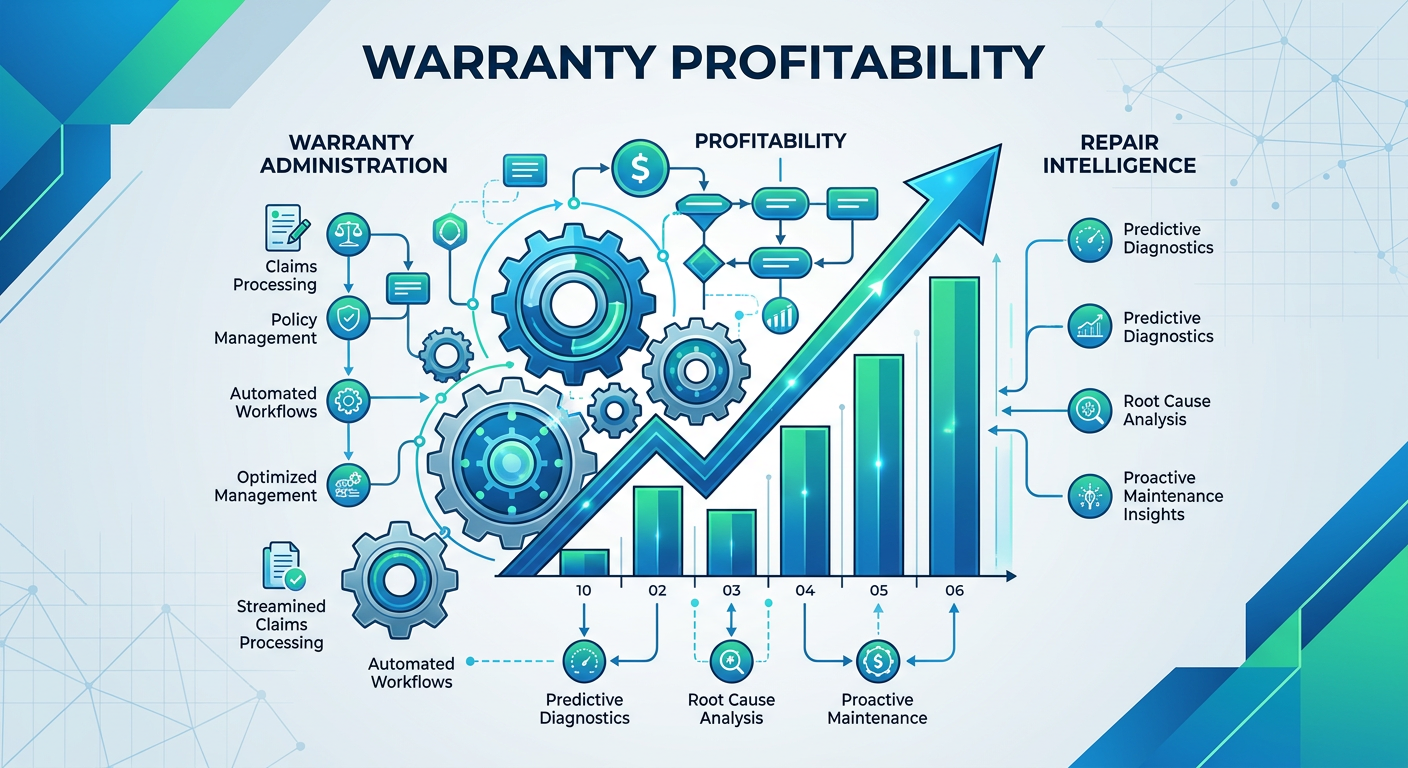
he Advanced Warranty Administration series is a 10-course professional training program designed to transform warranty operations into a structured, measurable, and financially controlled system.
Rather than treating warranty as a reactive administrative function, this program reframes it as an integrated operating system made up of five core pillars: structure, people, incentives, OEM rules, and performance measurement. Across the series, students learn how each pillar interacts and how misalignment between them creates hidden financial leakage inside dealership operations.
The course begins by establishing foundational concepts such as warranty structure, role definition, and hiring strategy, then progresses into the warranty claim lifecycle, OEM labor time guides, causal coding systems, and constraint logic. From there, it explores the human system behind warranty performance—showing how technicians, service advisors, and warranty administrators must function in alignment to maintain claim integrity.
The final modules focus on performance measurement and KPI design, teaching students how to build dashboards that prioritize leading indicators such as First-Time Through Rate (FTTR), documentation accuracy, and claim correction rates rather than simple activity-based reporting.
By the end of the program, students will understand how to design, evaluate, and optimize a complete warranty operating system that improves claim accuracy, reduces correction cycles, increases reimbursement consistency, and exposes hidden profitability within the service department.
This is not a procedural guide—it is a systems-based framework for controlling warranty performance at scale.
-
1
 Warranty Administration Fundamentals: What Actually Drives Warranty Profitability Course 1 of 10
Course 1 of 10 – Warranty Administration Fundamentals
Course Description
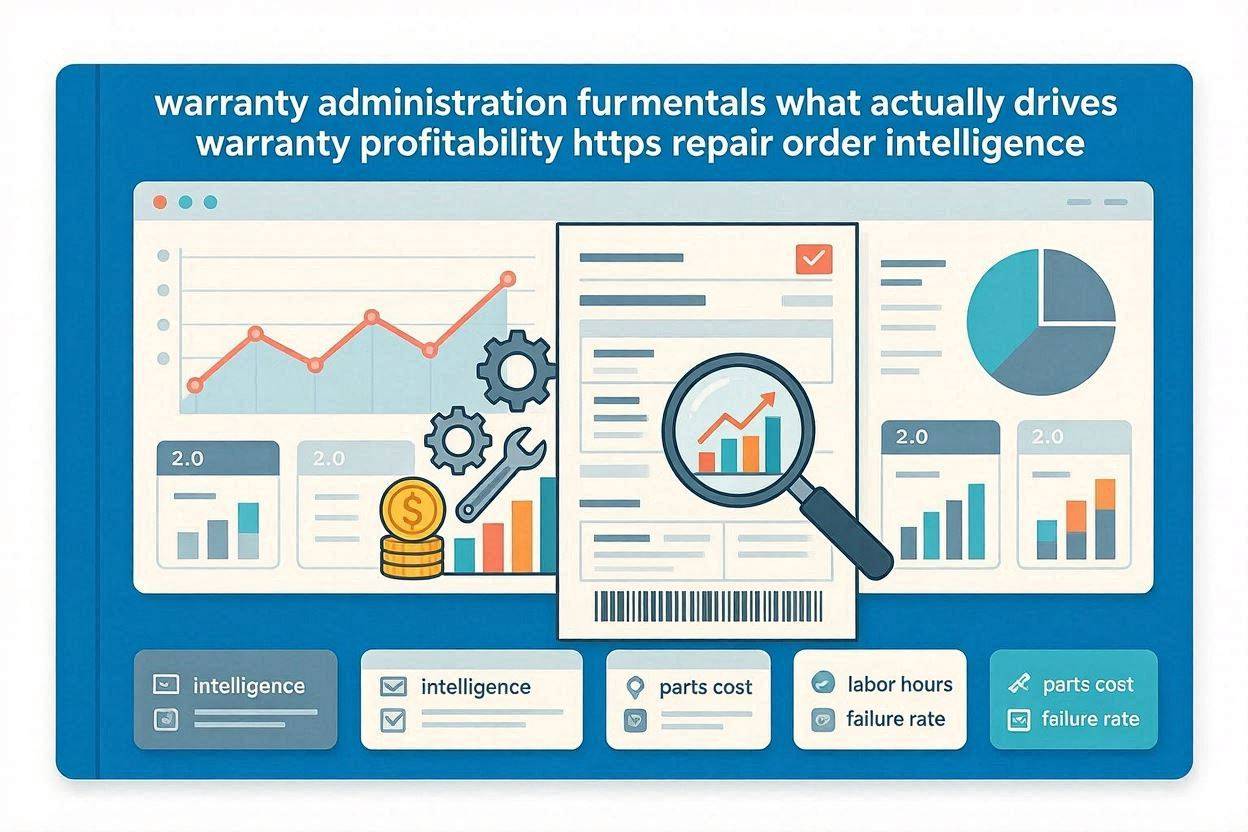
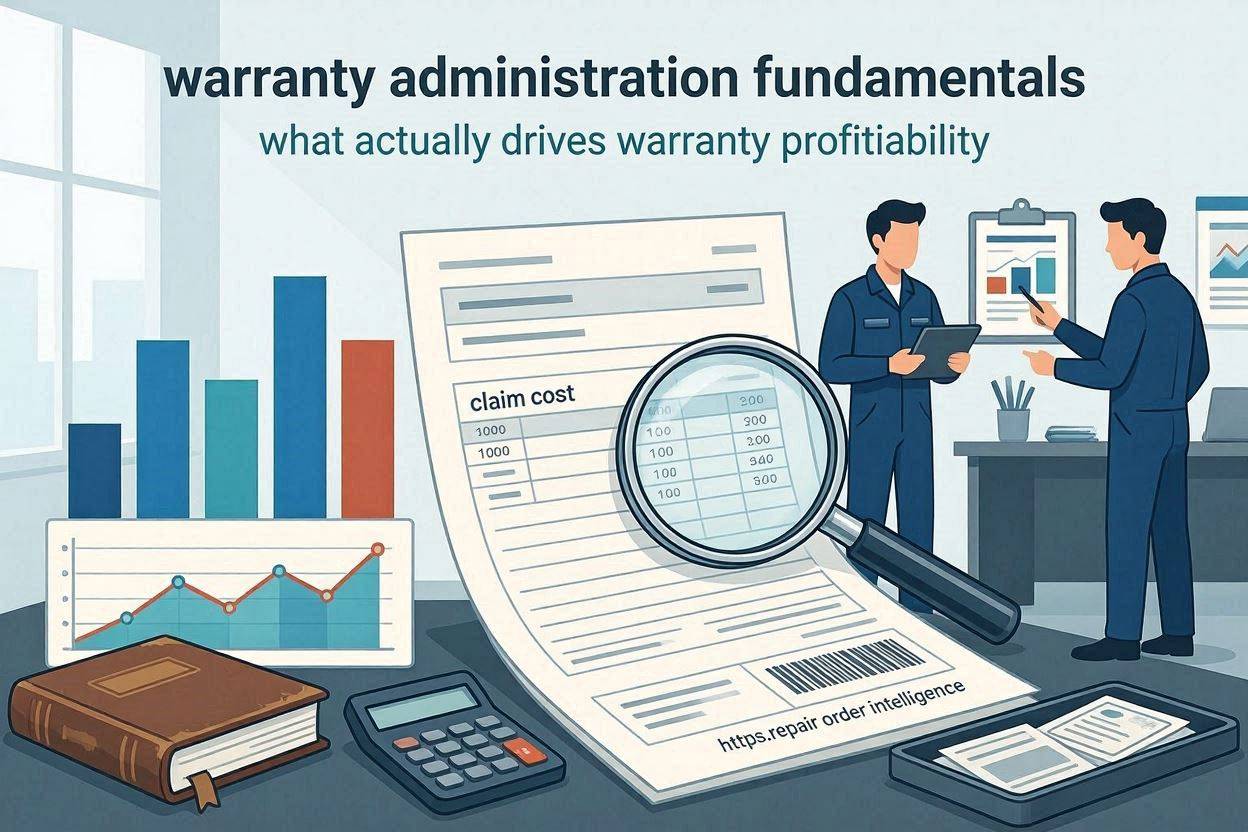
In this foundational course, students are introduced to warranty administration as a core financial control system within fixed operations—not a clerical or administrative function.
Rather than focusing on claim submission or approval rates alone, this lesson breaks down how warranty profitability is actually created through the integrity of the repair order. Students learn how labor operations, parts accuracy, technician documentation, causal coding, and submission timing collectively determine how much warranty revenue a dealership is truly able to recover.
The course challenges the common misconception that warranty success is defined by claim approval rate. Instead, it establishes that approval is only one step in a much larger system, and that significant profit leakage can occur even when approval rates appear strong on paper.
By the end of this course, students understand that warranty performance is driven by claim integrity—the completeness, accuracy, and defensibility of the repair order data before it is ever submitted to the manufacturer. This foundational understanding sets the stage for building a structured, system-based approach to warranty profitability across the remaining courses in the series.
-
2
 Warranty Administration Fundamentals: What Actually Drives Warranty Profitability Course 1 of 10 Video Lesson
Warranty Administration Fundamentals: What Actually Drives Warranty Profitability Course 1 of 10 Video Lesson
https://repairorderintelligence.com/
-
3
The Role of a High-Performing Warranty Administrator Course 2 of 10
The Role of a High-Performing Warranty Administrator
In this lesson, students move from understanding warranty administration as a system to defining the actual role responsible for controlling it. The course challenges the traditional view of the warranty administrator as a clerical or submission-focused position and reframes it as a critical financial control function within fixed operations.
The video explains how high-performing warranty administrators do far more than submit claims—they actively manage claim integrity before submission, defend reimbursement quality during processing, and create feedback loops that improve technician documentation, advisor clarity, and overall repair order accuracy.
Students are introduced to the four core functions of an effective warranty administrator: claim validation, claim defense, recovery optimization, and system feedback. These functions highlight how the role directly influences profitability by preventing loss before it occurs rather than reacting after claims are rejected or reduced.
By the end of this lesson, students understand the difference between average and high-performing warranty administration, and why the role should be viewed as a control position responsible for protecting labor reimbursement integrity across the entire dealership system. This foundation sets up the next course, which focuses on how to identify and hire a truly experienced warranty administrator.
-
4
The Role of a High-Performing Warranty Administrator Course 2 of 10 Video Lesson
The Role of a High-Performing Warranty Administrator Course 2 of 10 Video Lesson
https://repairorderintelligence.com/
-
5
Hiring the Right Warranty Administrator (Skill vs Experience vs Instinct) Course 3 of 10
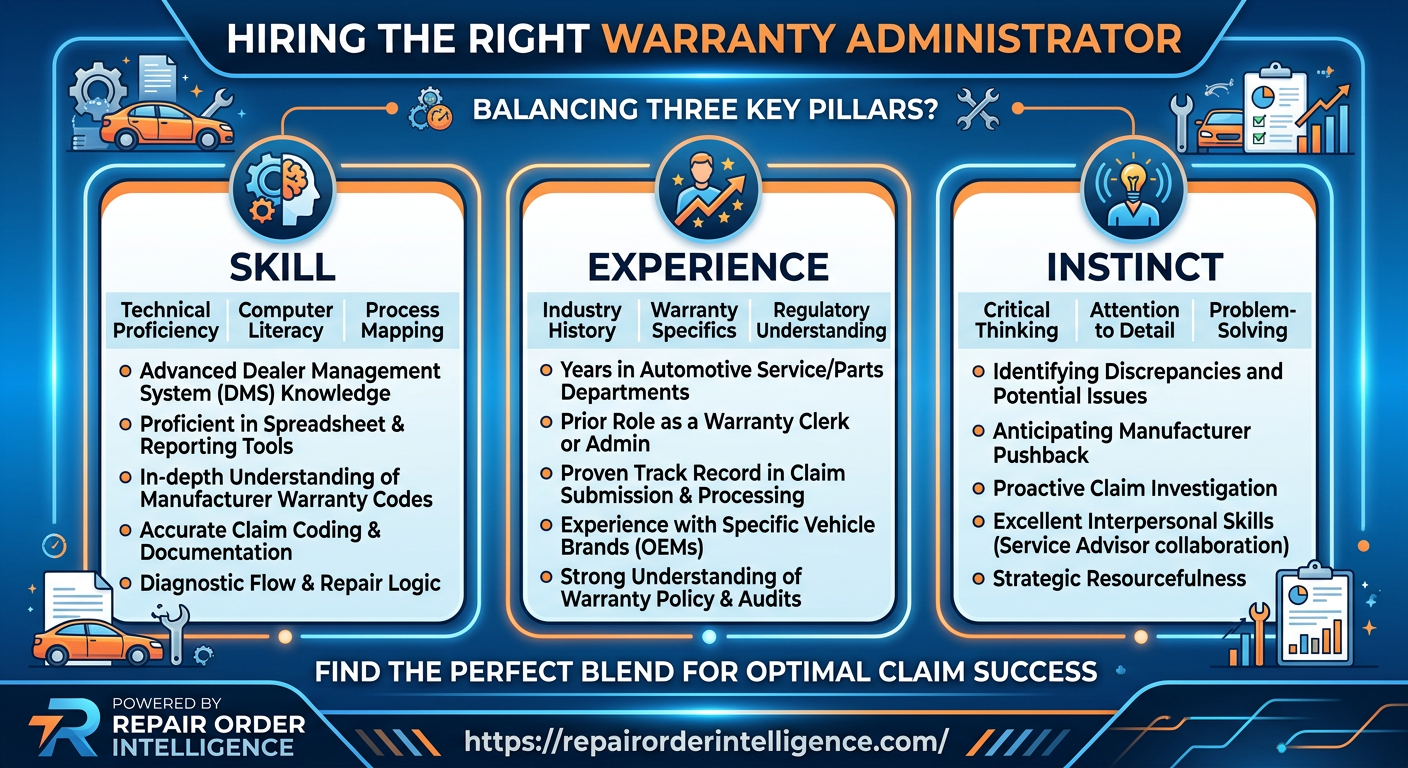
In this lesson, students learn how to properly evaluate and hire a warranty administrator based on real-world performance capability rather than résumé experience or OEM familiarity. The course challenges the common assumption that “seasoned” automatically means effective, and explains why years in a warranty role do not necessarily translate into strong claim performance or profitability control.
The video introduces a structured hiring framework built around three critical dimensions: technical skill, behavioral pattern, and system-thinking ability. Students learn how each dimension impacts warranty claim integrity, reimbursement accuracy, and the overall financial performance of the service department.
The lesson also highlights common hiring mistakes, including overvaluing claim volume experience, prioritizing speed over accuracy, and failing to assess whether a candidate can prevent warranty leakage before it occurs.
By the end of this course, students understand how to distinguish between reactive claim processors and proactive financial control operators. This creates a foundation for building a more effective hiring process and prepares the organization for the next step in the series: designing compensation structures that reinforce accuracy and claim integrity.
https://repairorderintelligence.com/
-
6
Hiring the Right Warranty Administrator (Skill vs Experience vs Instinct) Course 3 of 10 Video Lesson
Hiring the Right Warranty Administrator (Skill vs Experience vs Instinct) Course 3 of 10 Video Lesson

https://repairorderintelligence.com/
-
7
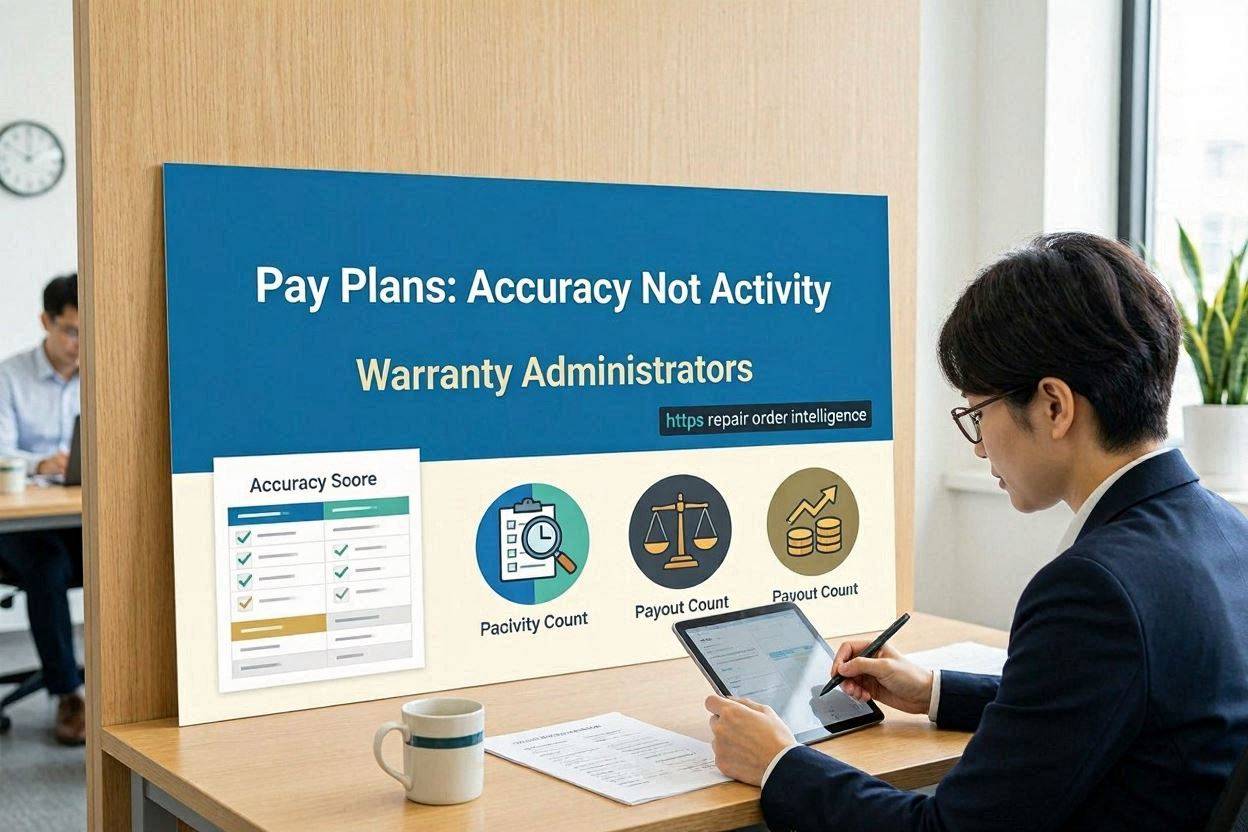
Warranty Administrator Pay Plans: Rewarding Accuracy, Not Activity Course 4 of 10
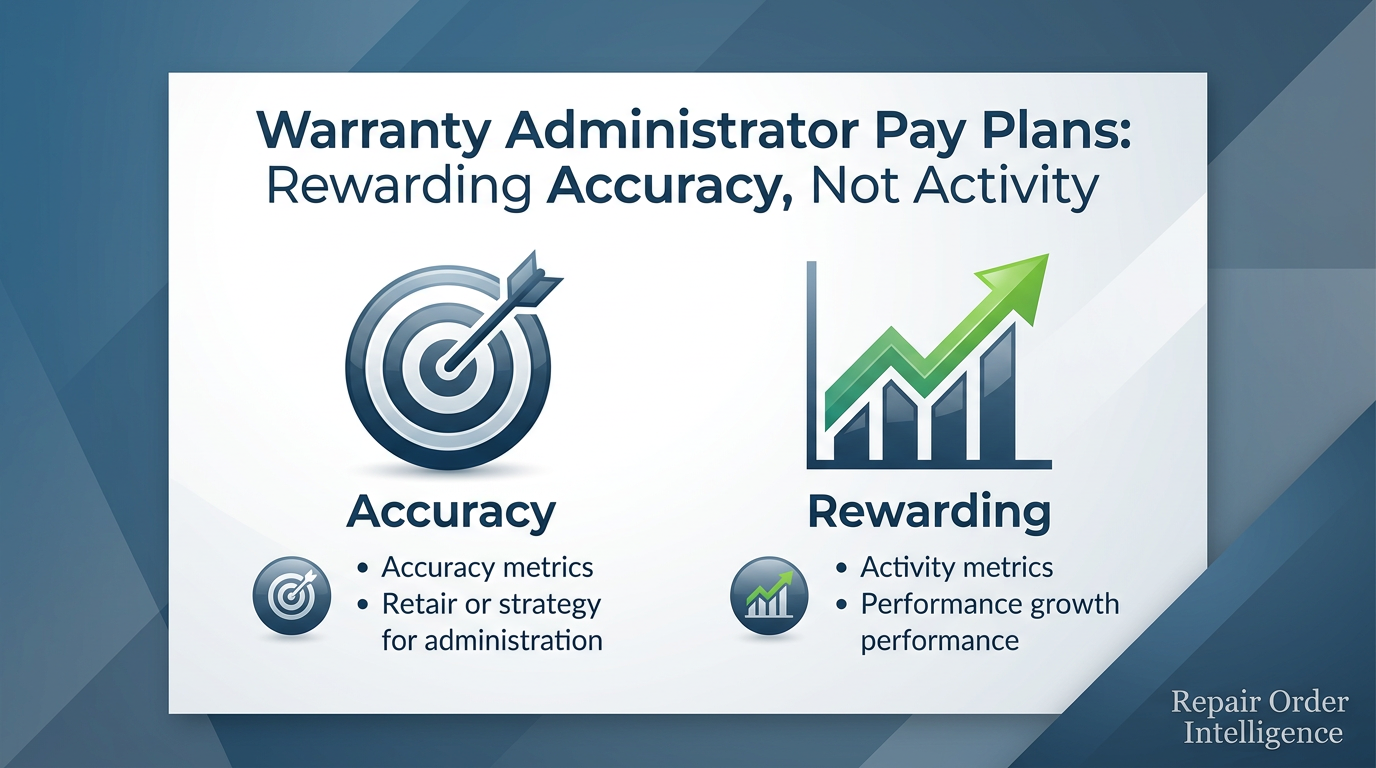
In this lesson, students learn how compensation structures directly shape warranty administration performance and, ultimately, dealership profitability. The course challenges common pay plan models that reward speed, volume, or reactive claim correction, and explains why these structures often contribute to warranty leakage rather than preventing it.
The video introduces the principle that pay plans determine behavior, and behavior determines claim integrity. Students explore why flat salary, per-claim incentives, and rework-based bonuses all fail to align with true warranty profitability objectives.
A structured compensation model is presented that prioritizes First-Time Through Rate (FTTR), claim accuracy, and supplement capture as the core drivers of performance measurement. Students learn how FTTR functions as a leading indicator of warranty health and why it is more effective than traditional volume-based metrics.
By the end of this course, students understand how to design incentive structures that reinforce accuracy, prevent rework, and improve upstream repair order quality. This sets the foundation for the next course, which evaluates when warranty administration should be handled in-house versus outsourced or operated through a hybrid model.
-
8
Warranty Administrator Pay Plans: Rewarding Accuracy, Not Activity Course 4 of 10 Video Lesson
Warranty Administrator Pay Plans: Rewarding Accuracy, Not Activity Course 4 of 10 Video Lesson
https://repairorderintelligence.com/
-
9
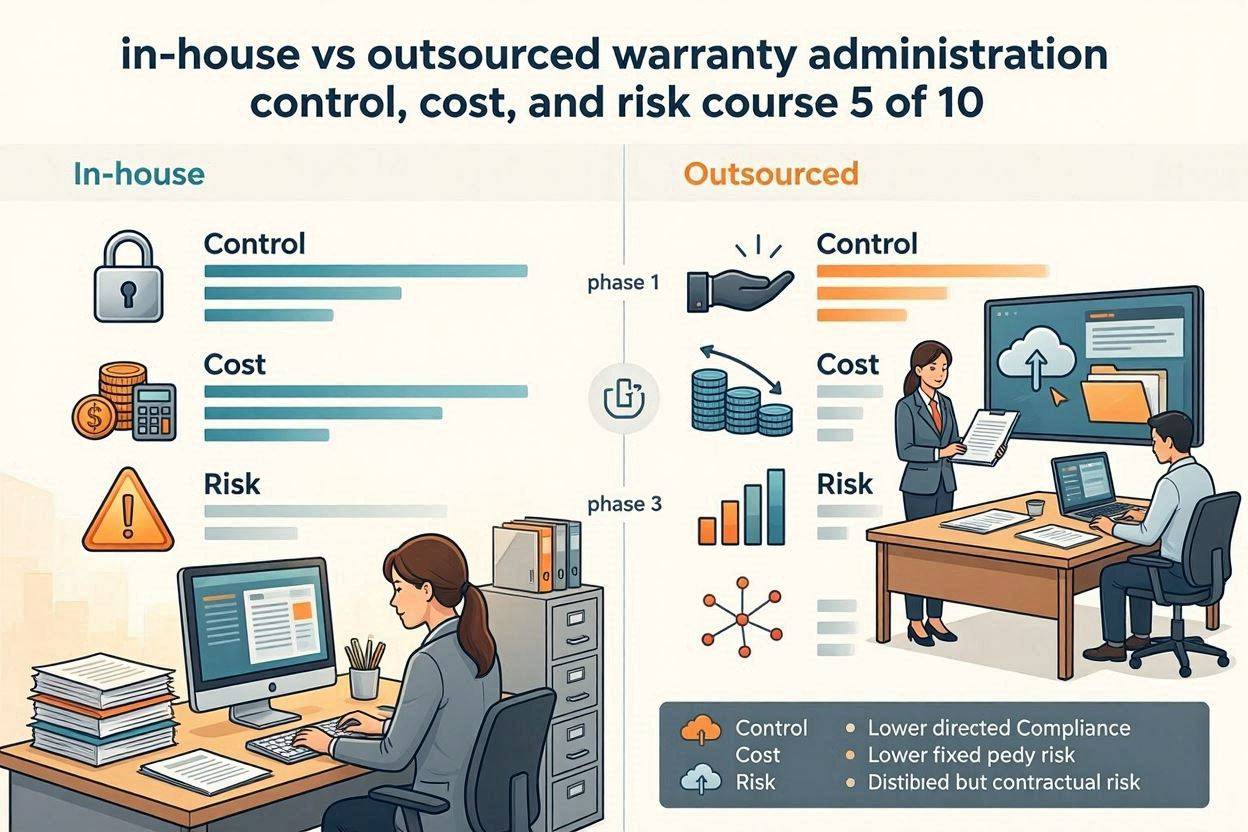
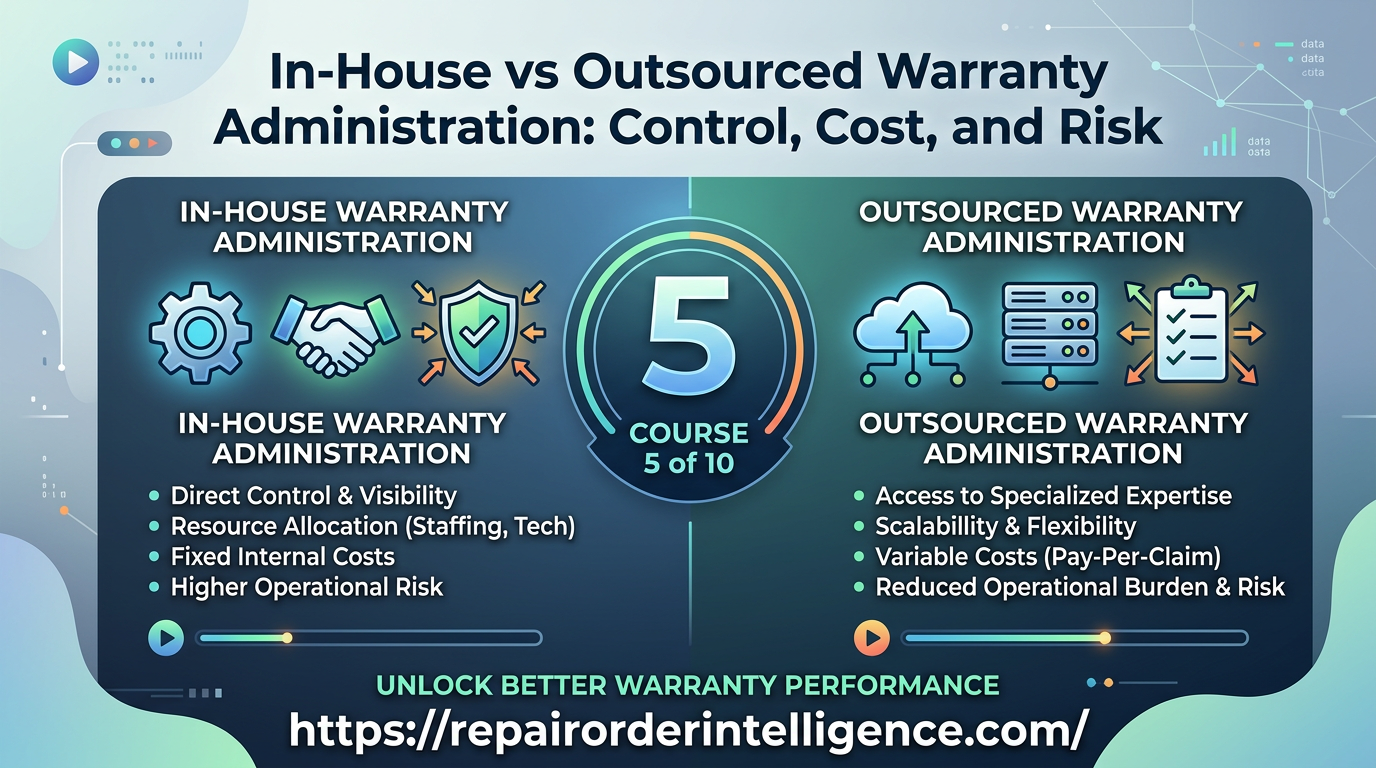
In-House vs Outsourced Warranty Administration: Control, Cost, and Risk Course 5 of 10
In this lesson, students examine one of the most important structural decisions in warranty operations: whether to manage warranty administration in-house, outsource it, or use a hybrid model. The course challenges the common assumption that this decision is primarily financial and reframes it as a question of control over claim integrity.
The video explains how proximity to the repair order directly impacts warranty performance. Students learn why in-house systems provide stronger visibility and context, how outsourcing introduces efficiency but reduces control, and why hybrid models require strong internal ownership to prevent system degradation.
A key concept introduced in this course is “control proximity,” which describes how the physical and operational distance between warranty administration and the repair order influences documentation quality, labor operation accuracy, and reimbursement outcomes.
By the end of this course, students understand that warranty structure is not simply a cost decision, but a strategic choice that determines how much warranty revenue is captured versus lost through reduced visibility, delayed communication, and incomplete claim context. This sets up the next course, which maps the full warranty claim lifecycle from repair order creation to final OEM payment.
-
10
In-House vs Outsourced Warranty Administration: Control, Cost, and Risk Course 5 of 10 Video Lesson
In-House vs Outsourced Warranty Administration: Control, Cost, and Risk Course 5 of 10 Video Lesson
https://repairorderintelligence.com/
-
11
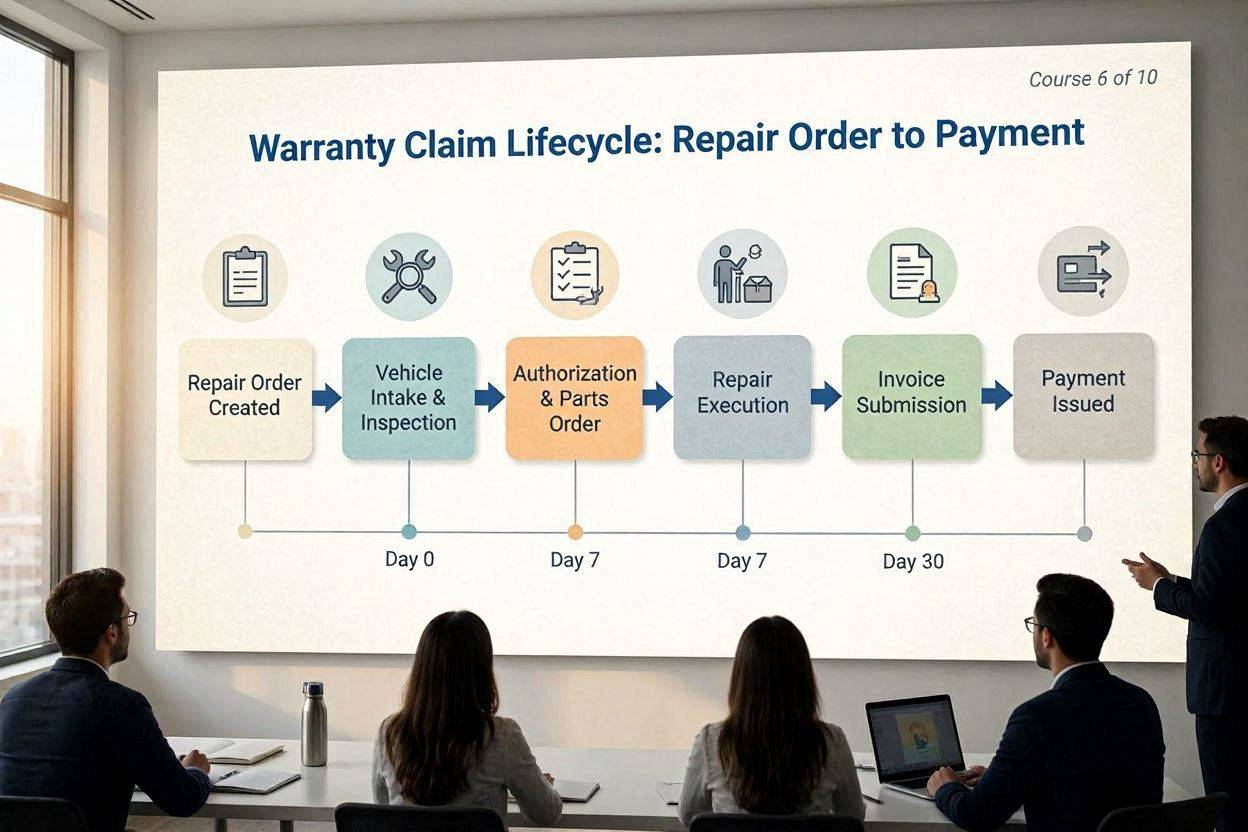
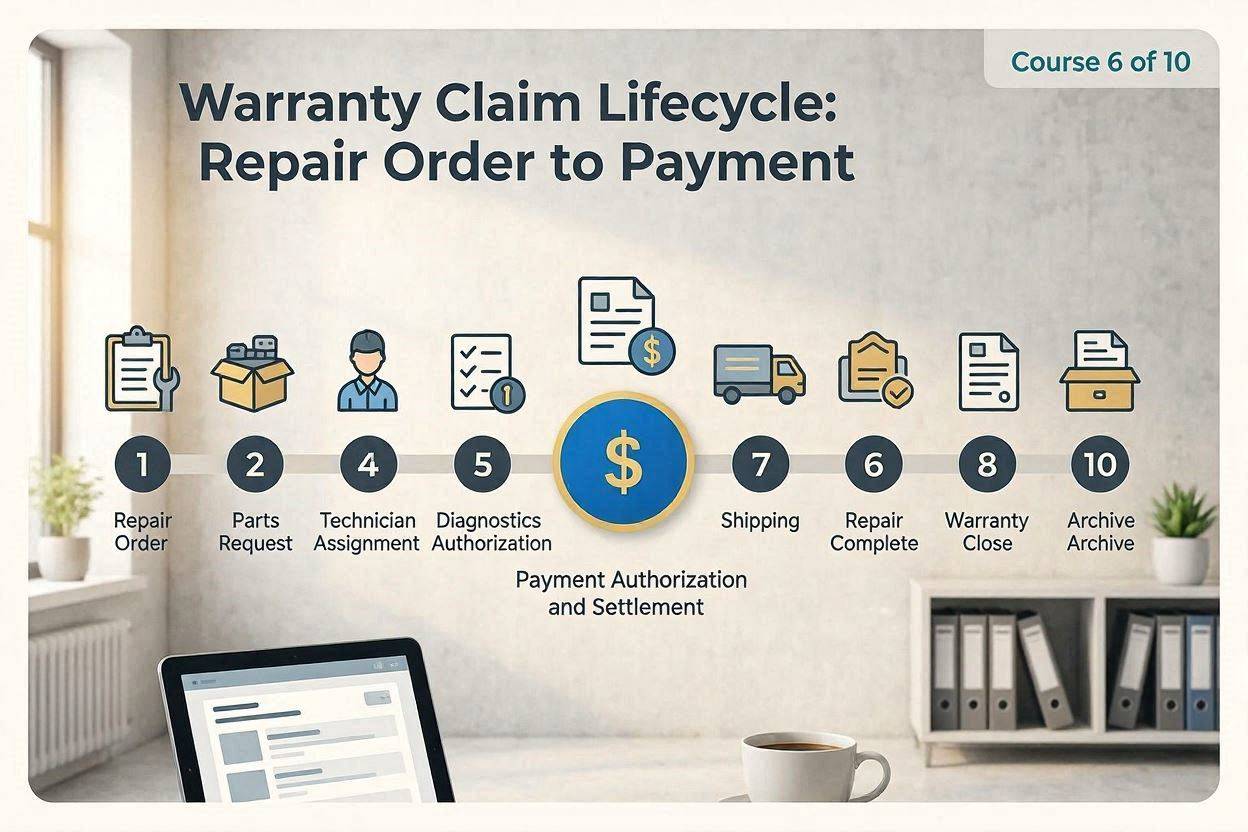
The Warranty Claim Lifecycle: From Repair Order to Payment Course 6 of 10
In this lesson, students learn how warranty claims actually move through the dealership system—from the initial repair order creation all the way through OEM review and final payment. The course breaks down the full lifecycle into clear stages, showing how each step contributes to either strengthening or weakening claim profitability.
The video emphasizes that warranty outcomes are not determined at the point of submission, but are instead shaped upstream through repair order quality, technician documentation, advisor narratives, and internal validation processes. Students gain a clear understanding of how small breakdowns at each stage compound into significant financial leakage over time.
A key focus of the lesson is the distinction between internal and external failure points. Students learn that most warranty losses occur inside the dealership due to documentation gaps, labor operation inaccuracies, and incomplete validation—not at the manufacturer level during approval or rejection.
By the end of this course, students understand that submission is not where warranty value is created, but where it is exposed. This sets the foundation for the next course, which explores how labor time guides, causal coding, and OEM constraints define what reimbursement is actually possible within the warranty s
-
12
The Warranty Claim Lifecycle: From Repair Order to Payment Course 6 of 10 Video Lesson
The Warranty Claim Lifecycle: From Repair Order to Payment Course 6 of 10 Video Lesson
https://repairorderintelligence.com/
-
13
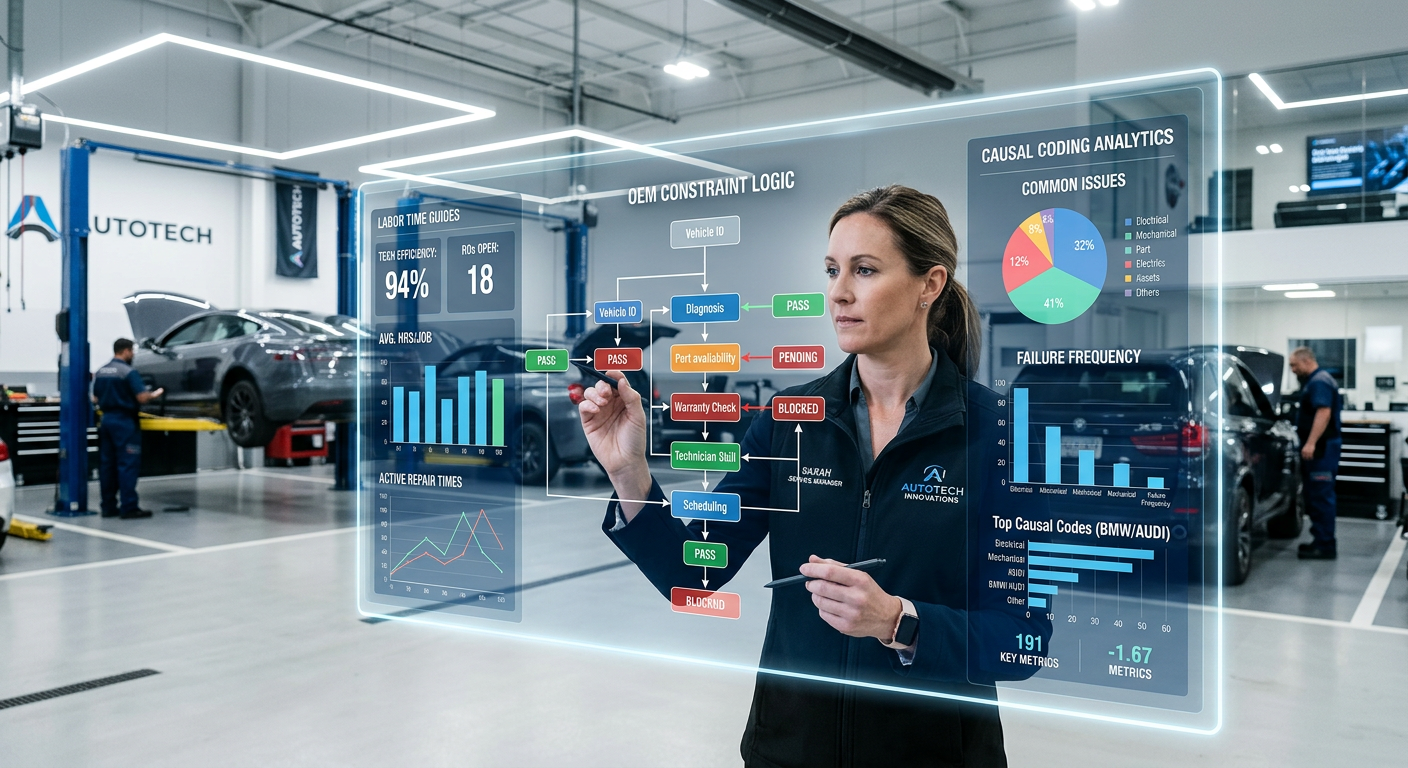
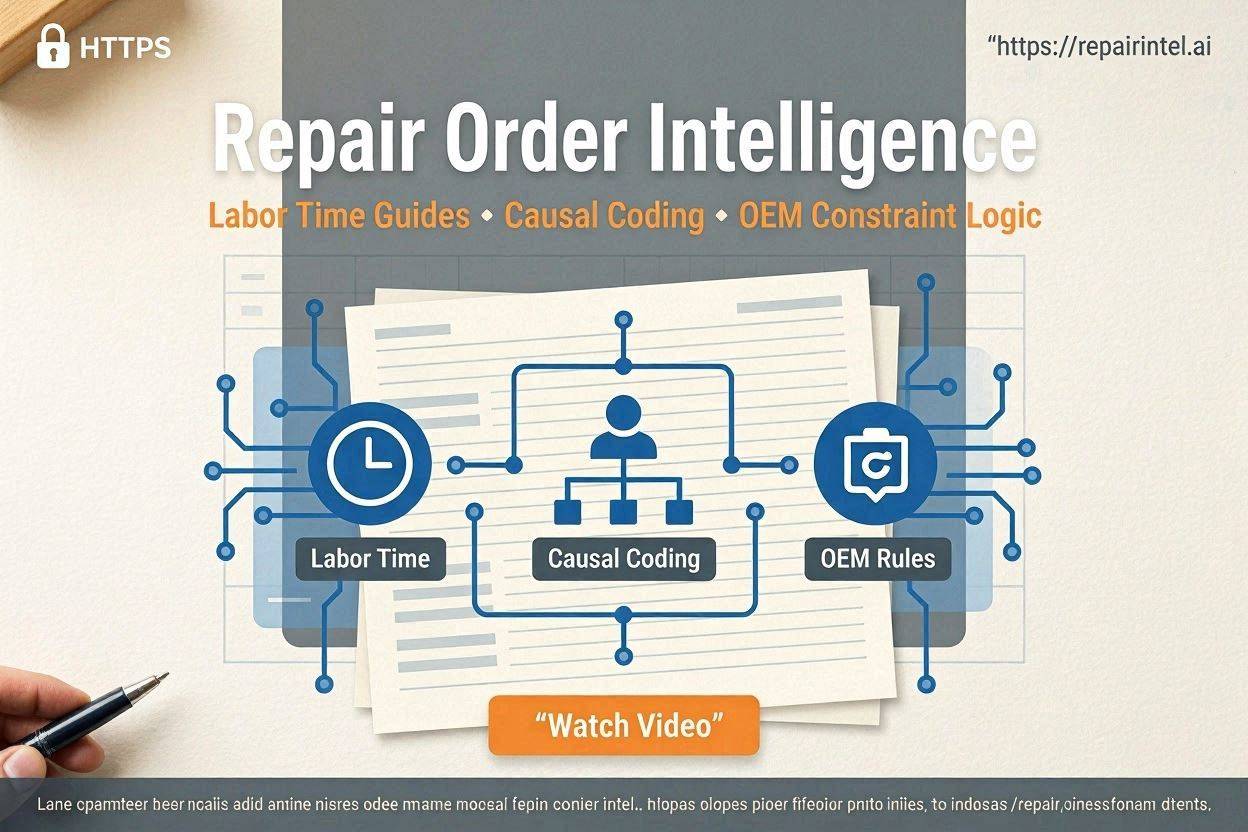
Labor Time Guides, Causal Coding, and OEM Constraint Logic Course 7 of 10
Course 7 shifts the focus from process execution to the underlying rule system that governs warranty reimbursement. In this module, students learn how OEM labor time guides, causal coding structures, and policy constraints define the financial boundaries of every warranty claim before it is ever submitted.
Rather than treating these elements as administrative requirements, the course reframes them as a structured constraint system that determines what is eligible for reimbursement and what is not. Students gain clarity on how labor time guides establish allowable labor ceilings, how causal coding functions as a classification mechanism that drives claim evaluation, and how OEM policies ultimately define the limits of recoverable value.
The course also highlights how most warranty leakage occurs when claims are built without full awareness of these constraints—through incorrect labor operation selection, missed allowable operations, or weak causal justification that fails to align with OEM logic.
By the end of this course, students understand that warranty performance is not only about documentation quality, but about building claims within a defined rule system that governs reimbursement outcomes. This foundation prepares students for the next course, which focuses on the communication breakdowns between technicians, advisors, and warranty administrators that directly impact claim integrity.
-
14
Labor Time Guides, Causal Coding, and OEM Constraint Logic Course 7 of 10 Video Lesson
Labor Time Guides, Causal Coding, and OEM Constraint Logic Course 7 of 10 Video Lesson
https://repairorderintelligence.com/
-
15
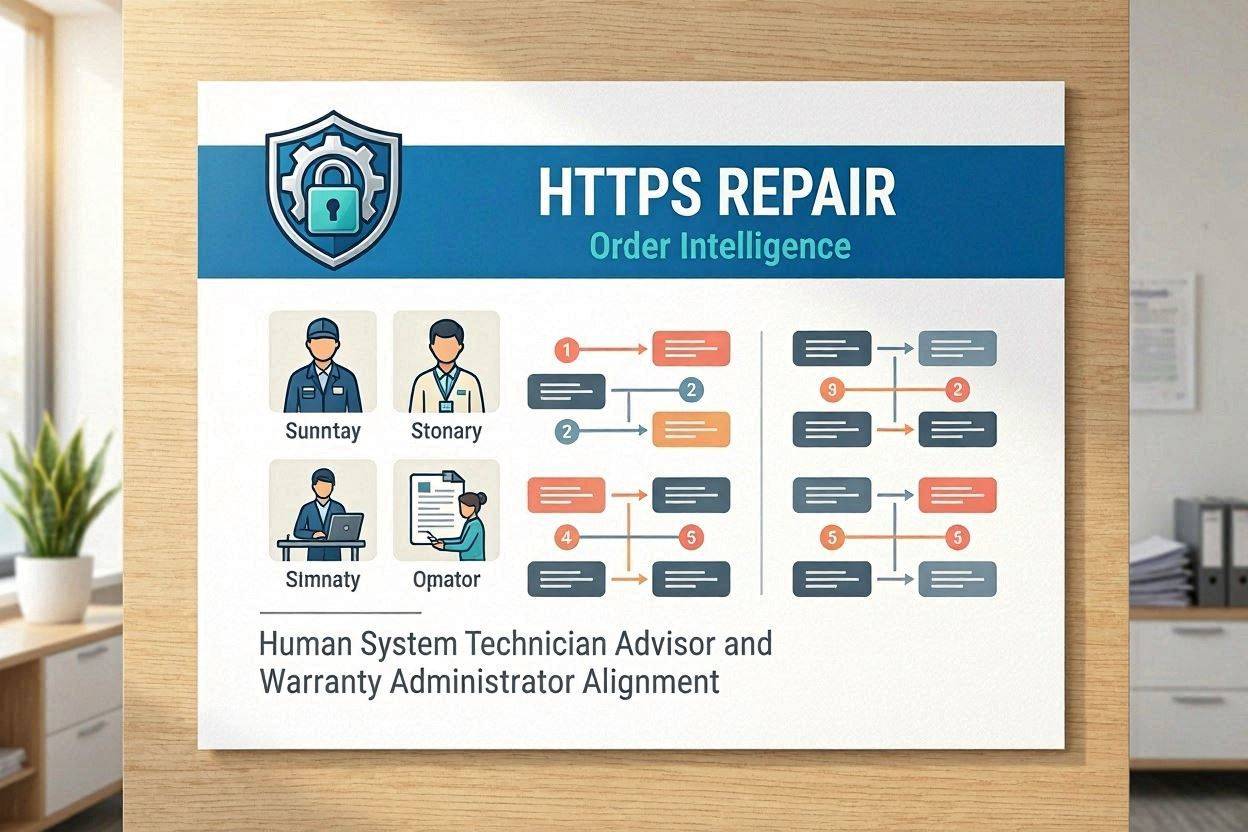
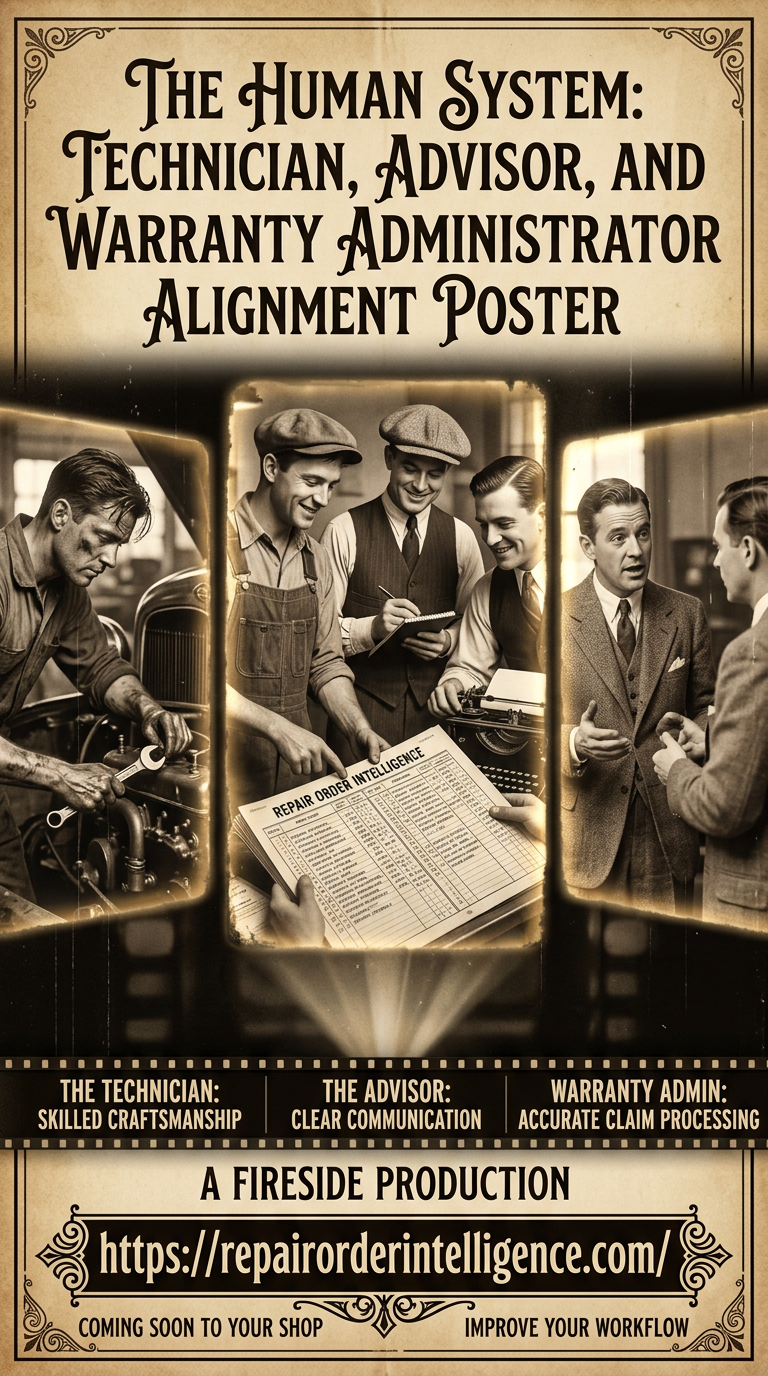
The Human System: Technician, Advisor, and Warranty Administrator Alignment Course 8 of 10
Course 8 examines the human side of warranty administration by exploring how communication and coordination between technicians, service advisors, and warranty administrators directly influence claim quality and reimbursement outcomes. While previous courses focused on processes, policies, and OEM requirements, this module demonstrates that even the best systems fail when the people operating within them are not aligned.
Students learn how each role contributes to the development of a warranty claim, beginning with technician documentation, continuing through service advisor repair order narratives, and ending with warranty validation prior to OEM submission. The course explains how information is translated at each stage and how small communication breakdowns can compound into significant warranty leakage.
Special attention is given to identifying common organizational silos, understanding the impact of inconsistent repair order documentation, and establishing effective feedback loops that improve communication across the service department. Students will also learn practical strategies for creating shared documentation standards and improving collaboration between departments.
By the end of this course, students will understand that warranty performance is not solely determined by individual competence, but by how effectively technicians, advisors, and warranty administrators function as a coordinated system. This prepares students for the next course, where they will learn how to measure warranty performance using meaningful KPIs that drive continuous operational improvement.
-
16
The Human System: Technician, Advisor, and Warranty Administrator Alignment Course 8 of 10 Video Lesson
The Human System: Technician, Advisor, and Warranty Administrator Alignment Course 8 of 10 Video Lesson
https://repairorderintelligence.com/
-
17
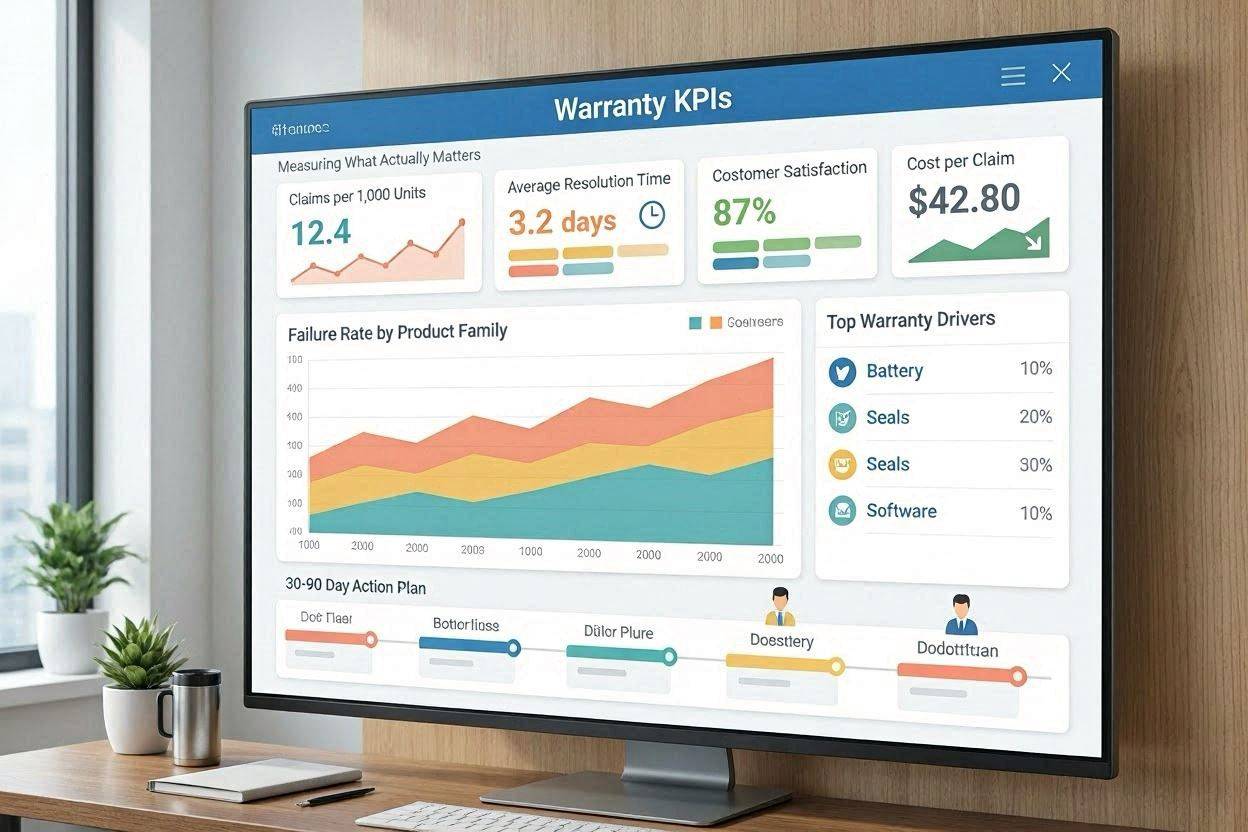
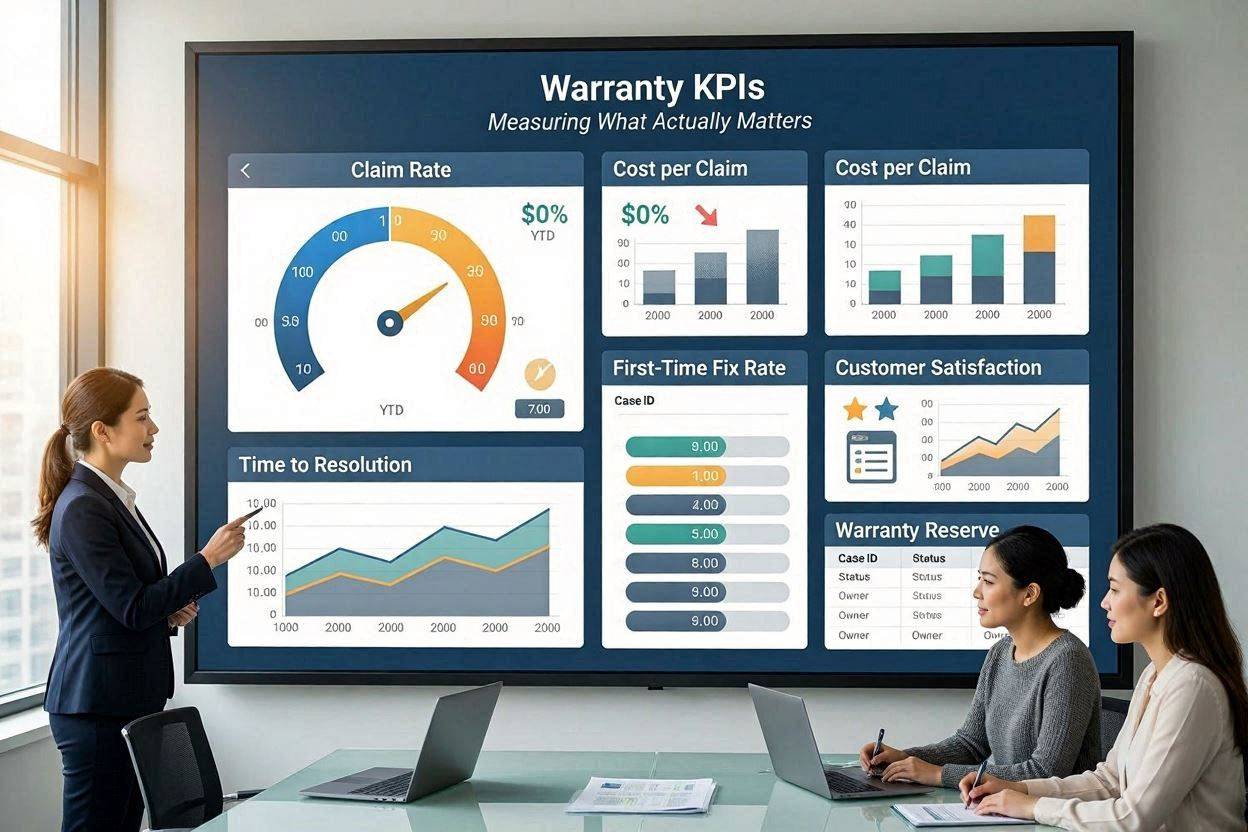
Warranty KPIs and Performance Dashboards: Measuring What Actually Matters Course 9 of 10
Course 9 focuses on one of the most important aspects of a high-performing warranty operation: measuring the right things. Students learn why many dealerships rely on activity-based metrics that report past performance but fail to identify opportunities for operational improvement. The course introduces a structured performance measurement framework designed to monitor warranty health through meaningful key performance indicators rather than simple production statistics.
Throughout this course, students explore the difference between leading and lagging indicators, learning how metrics such as First-Time Through Rate (FTTR), documentation accuracy, claim correction rate, supplement capture rate, and claim cycle time provide a more accurate picture of warranty performance than traditional measures like claims processed or total reimbursement dollars.
The course also demonstrates how to build practical performance dashboards and department-specific scorecards for technicians, service advisors, warranty administrators, and service managers. Students learn how to use data as a coaching and continuous improvement tool instead of a reporting or disciplinary mechanism, creating a culture where performance is monitored proactively rather than reactively.
By the end of this course, students will understand how effective measurement systems drive better decision-making, strengthen warranty claim integrity, and support long-term profitability by identifying trends and process weaknesses before they become financial losses. This prepares students for the final course of the series, where all concepts are combined into a comprehensive strategy for building a world-class warranty administration operation.
-
18
Warranty KPIs and Performance Dashboards: Measuring What Actually Matters Course 9 of 10 Video Lesson
Warranty KPIs and Performance Dashboards: Measuring What Actually Matters Course 9 of 10 Video Lesson
https://repairorderintelligence.com/
-
19
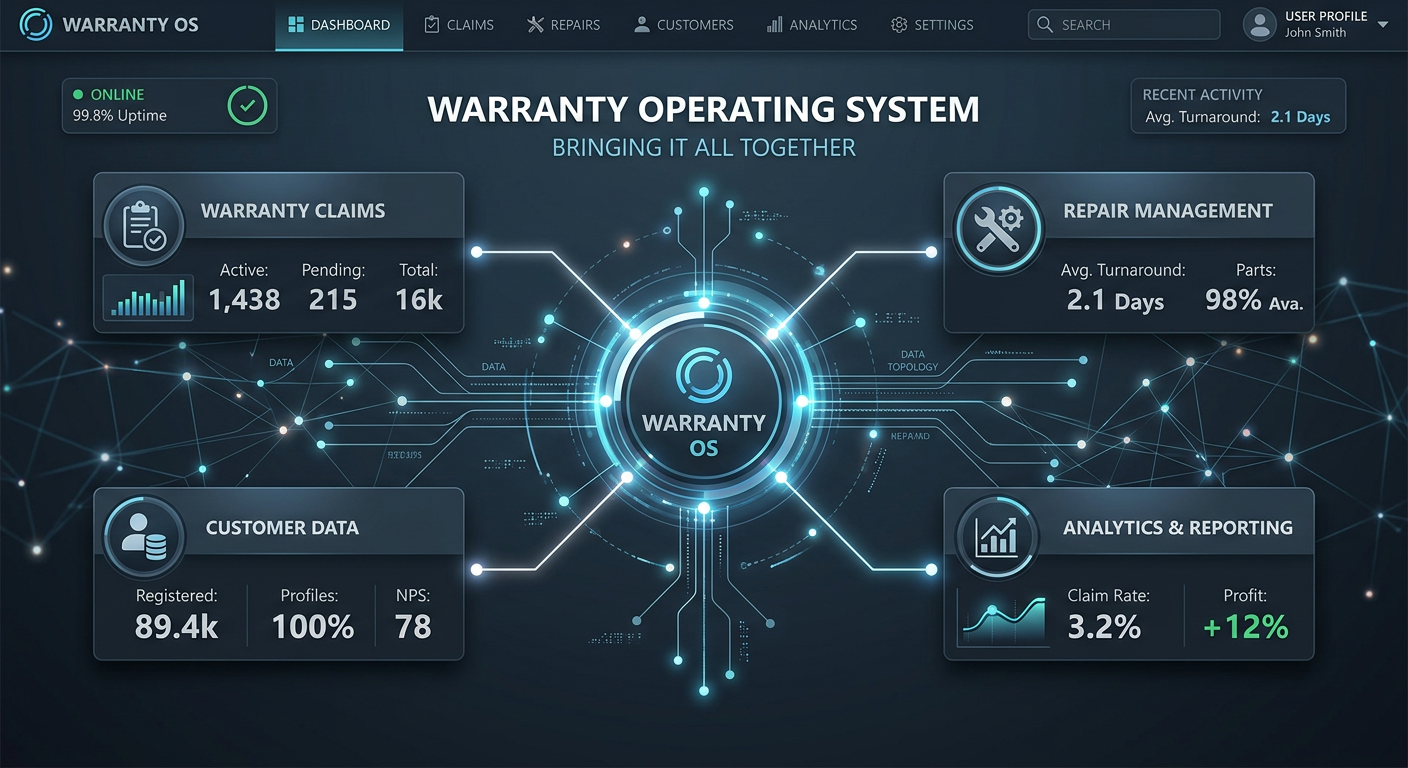
The Warranty Operating System: Bringing It All Together Course 10 of 10
Course 10 brings the entire warranty administration framework together into a single, unified operating system. Rather than viewing warranty as a collection of separate tasks—hiring, pay plans, claim processing, OEM rules, communication, and reporting—this course shows how each component interacts as part of one interconnected system that determines profitability.
Students learn how structure, people, incentives, rules, and measurement must all align for warranty performance to improve sustainably. The course demonstrates how breakdowns in any one area—such as misaligned incentives, poor communication between roles, or weak adherence to OEM constraints—create compounding financial leakage across the entire process.
A key focus of this lesson is shifting perspective from departmental management to system management. Students are guided through the concept of a warranty “flywheel,” where improvements in documentation, First-Time Through Rate (FTTR), communication, and validation reinforce one another and drive continuous operational improvement.
By the end of this course, students will understand how to design, evaluate, and optimize a complete warranty operating system that integrates all previously covered concepts into a single framework for control, consistency, and profitability. This final module transforms warranty administration from a reactive function into a structured, measurable, and scalable system.
-
20
The Warranty Operating System: Bringing It All Together Course 10 of 10 Video Lesson
The Warranty Operating System: Bringing It All Together Course 10 of 10 Video Lesson
https://repairorderintelligence.com/
It is the predictable result of system design—especially how people, process, and measurement align across the repair order lifecycle.
This is a systems course, not a hacks course.
When those components are aligned, the system works. When they are not, it leaks.
Course Requirements
Advanced Warranty Administration – 10-Course Series
📌 Requirements
There are no formal prerequisites for this course.
No certifications.
No prior coursework.
No secret handshake with OEM field reps.
If you can read a repair order, you’re technically qualified.
🧠 Recommended Experience (Strongly Suggested)
While not required, this course will make significantly more sense if you have:
- 2–3 years of experience in a dealership service department
- Exposure to warranty claims (even the painful ones)
- At least one moment of confusion involving labor operations that “should’ve paid” but didn’t
- A general understanding that OEM rules are not emotionally flexible
⚠️ Honest Disclaimer
Can you take this course with zero experience?
Yes.
Will it feel like learning a new language while standing inside a running service drive?
Also yes.
🧾 Reality Check
If you do not have 2–3 years of hands-on experience, you may find yourself asking questions like:
- “Why is this claim denied when everything looks right?”
- “Who decided this labor time?”
- “Why does this repair order have 14 hidden rules?”
If you do have experience, you’ll mostly be nodding quietly and occasionally saying:
“Yeah… that’s exactly what’s happening.”
🏁 Final Note
This course does not require experience.
But experience does tend to make it significantly less confusing—and slightly more concerning.