Curriculum
Course Series: Shop Foreman Transformation System 101
Course Series: Shop Foreman Transformation System 101
0/2


Flow Collapse Points: Where The Shop Actually Breaks
0/2
Dispatch Is Not A Queue — It Is A Control System
0/2
Course 1 of 10: You Are No Longer a Technician
Course 1: “You Are No Longer a Technician”
Core Idea:
The biggest failure point in the shop foreman role is identity—not skill.
Most foremen still see themselves as:
- the best tech in the building
- the backup fixer
- the guy who jumps in when things go wrong
But that mindset silently destroys shop efficiency.
Because every minute a foreman spends “being a tech” is a minute they are NOT:
- clearing bottlenecks
- protecting throughput
- supporting stalled jobs
- improving other technicians
- stabilizing workflow
This course is about one thing:
Breaking the technician identity.
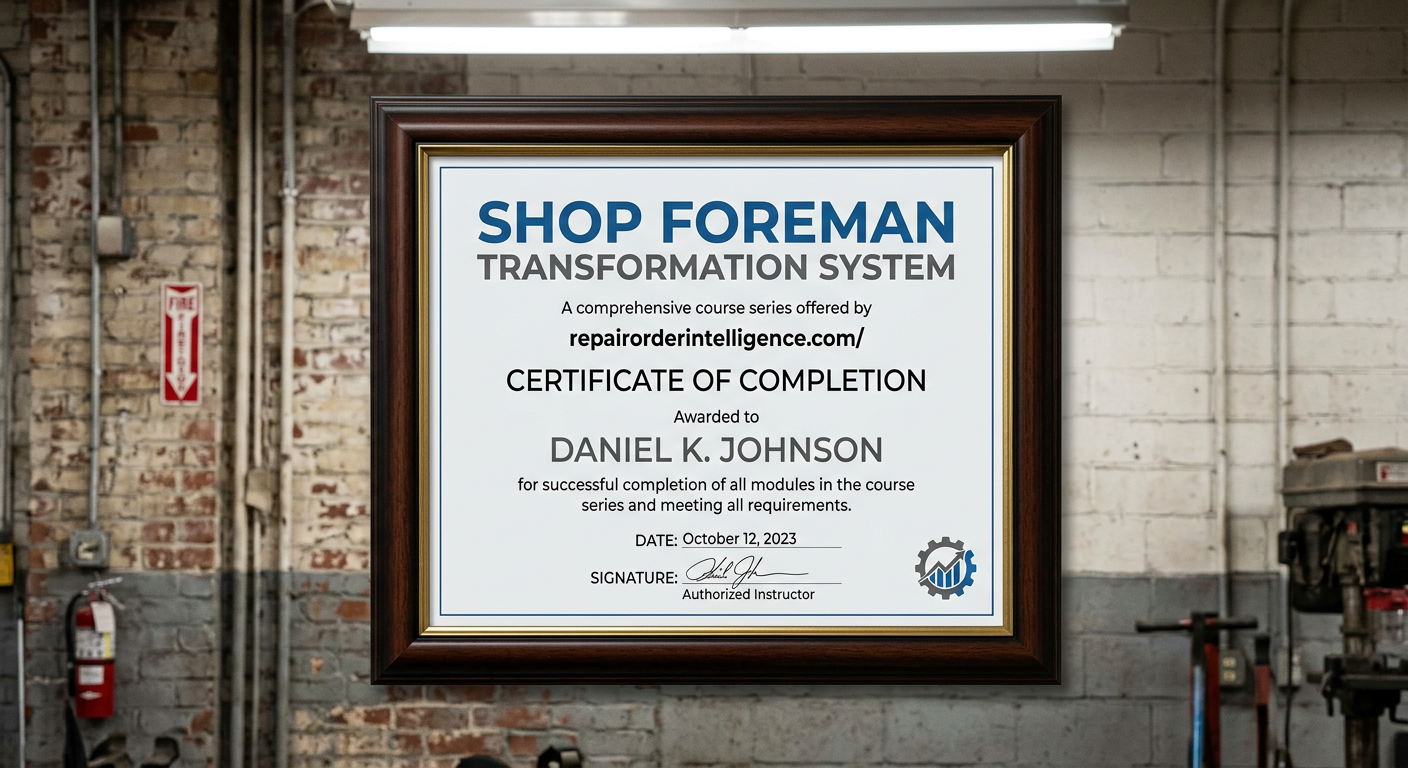
Lesson 1: The Identity Shift Nobody Forces
You were promoted because you were good at fixing cars.
But the job you now hold is not fixing cars.
It is:
- managing flow
- removing friction
- preventing delays
- stabilizing output
If you still think like a technician first, the shop will always feel “behind,” even when you’re working harder than ever.
Lesson 2: The Hidden Cost of “Stepping In”
Every time the foreman grabs a wrench, three things happen:
- A bottleneck goes unmanaged
- Another technician loses support
- Shop flow becomes reactive instead of controlled
It feels productive in the moment.
But it creates system-level slowdown disguised as help.
Lesson 3: Why Being the Best Tech Becomes a Liability
The better you are at technical work, the more dangerous your role becomes.
Because:
- you are the fastest “problem solver” in the building
- you become the default solution for everything stuck
- the system learns to route problems to you instead of fixing them upstream
You stop scaling the shop.
You become the shop’s pressure valve.
Lesson 4: The Real Job Is Invisible Work
Foreman value is not visible on a repair order.
It shows up as:
- fewer stalled vehicles
- fewer interruptions
- smoother dispatch cycles
- faster bay turnover
- fewer “where is this car?” moments
If your value is visible as physical repairs, you are in the wrong role behaviorally.
Lesson 5: The Two Shops You Are Always Running
Every dealership actually has two shops:
- The physical shop (cars, bays, techs)
- The flow shop (decisions, timing, routing, interruptions)
Most foremen only manage #1.
Elite foremen live in #2.
Lesson 6: Why Interruptions Are Your True Enemy
Every interruption is not equal.
Some are:
- urgent and value-adding
- most are system noise
But when a foreman personally handles interruptions, they:
- validate disruption as normal
- increase dependency on escalation
- reduce technician autonomy
Lesson 7: Your Job Is to Make Yourself Less Needed
This is the hardest mental shift:
A good foreman is not constantly involved.
A great foreman:
- prevents escalation
- builds technician independence
- creates predictable flow
- reduces the need for intervention
If everything routes through you, the system is failing—even if the shop looks busy.
Lesson 8: Technician Development Is Your Output
Your primary production is not repair work.
It is:
- better technicians
- fewer comebacks
- faster diagnostics
- fewer questions per job
- increased confidence in the bay
If your techs are not improving over time, you are not doing foreman work—you are just assisting.
Lesson 9: The Trap of “Helping the Shop”
Helping feels good.
But unmanaged helping creates:
- dependency loops
- decision bottlenecks
- hidden queue buildup
- uneven workload distribution
Helping is not the goal.
Flow stability is the goal.
Lesson 10: The New Definition of Success
You are successful as a foreman when:
- technicians don’t need you for basic decisions
- cars don’t stall waiting for direction
- work moves without constant escalation
- your involvement decreases while output increases
- the shop runs smoother when you are NOT firefighting
That is the paradox:
If you are constantly busy “helping,” the system is not being improved.
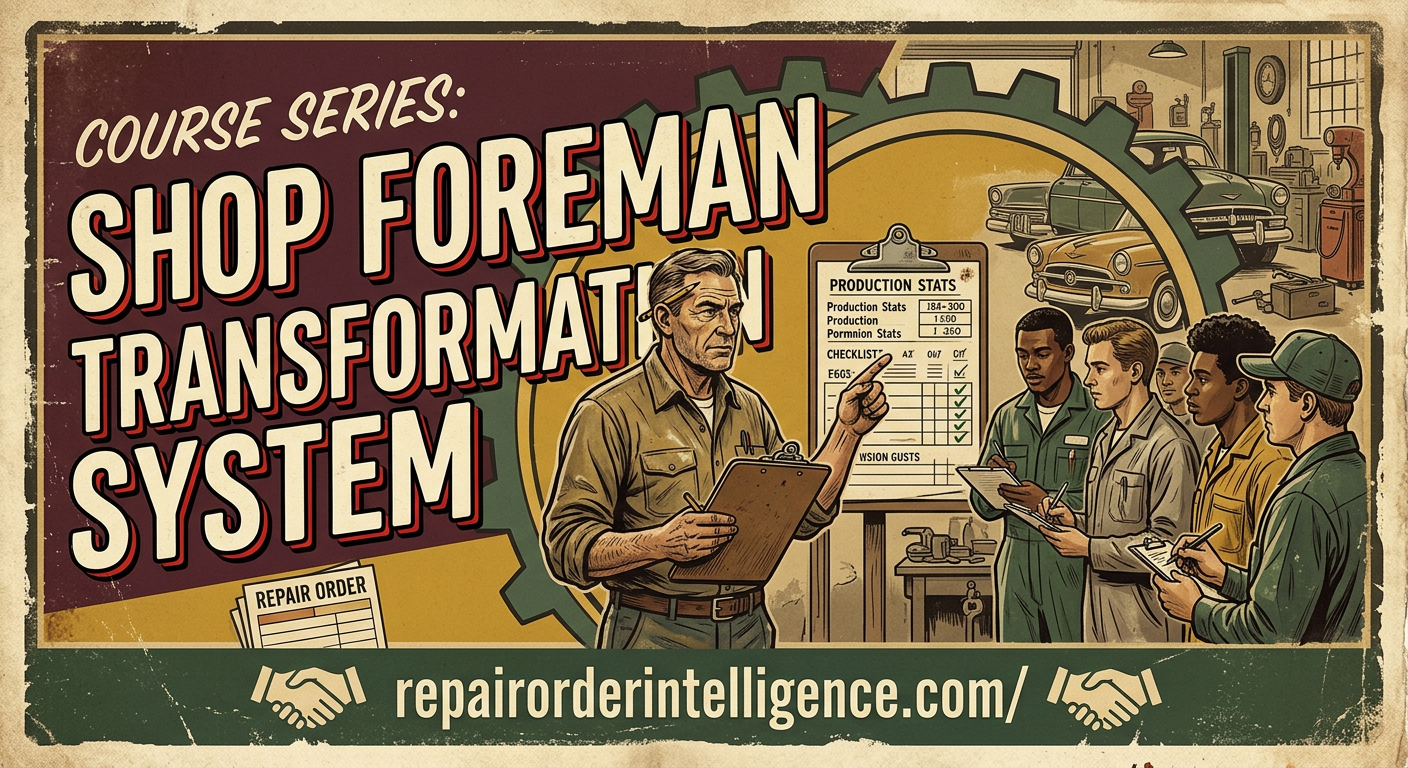
COURSE 1 SUMMARY SHIFT
You are not a senior technician anymore.
You are:
a shop flow operator responsible for system efficiency, not repair output.
Lesson Materials
